Rune closed a $40 million Series A led by Spark Capital and simultaneously unveiled RELIC, a modular data-center system that plugs GPU clusters directly into a solar farm's DC bus, bypassing the grid interconnection queue that has become the tightest constraint on AI capacity build-out. The round brings Rune's total funding to $53.5 million and drew Union Square Ventures, Lowercarbon Capital, Activate Capital, Committed Capital, Timeless Partners and Logos Fund.
Data centers built behind the inverter
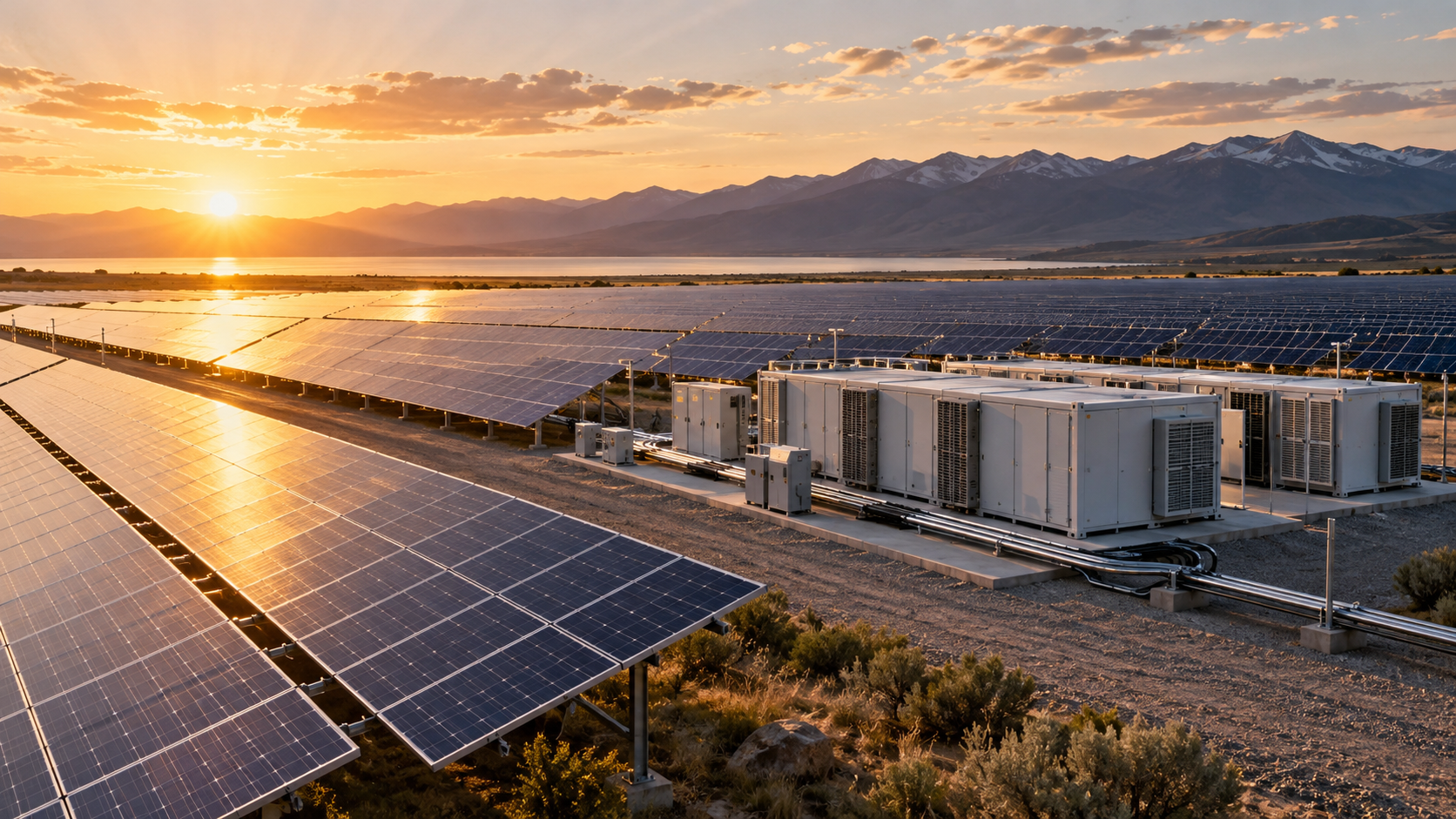
RELIC — short for Renewable Energy Linked Intelligent Compute — sits behind a solar plant's power electronics and consumes electricity on the DC bus before it is converted for grid export. Each 100-kilowatt building block scales into deployments north of 100 megawatts and supports GPU clusters of 8 to 1,024 units. The platform flexes compute load within milliseconds to track available generation, effectively converting curtailed solar into inference throughput.
Why it matters
Grid connection wait times of three to five years for new hyperscale sites have become a bigger bottleneck for AI capacity than either GPUs or capital. Rune's pitch — that customers can drop workloads next to already-permitted renewable plants — sidesteps that queue and gives solar developers a new revenue stream on the megawatts that would otherwise be curtailed under grid constraints. It is a very different theory of the case than the gigawatt-scale, nuclear-adjacent AI factories Crusoe just raised $3.9B to build.
Money follows the same thesis
Rune's cap table reflects the emerging climate-plus-compute crossover: Lowercarbon and Activate on the climate-tech side, Spark and Union Square on the software side. The syndicate has been popping up in other stranded-power plays like Nomos Energy's €20M Series A and Planted's $31.8M robotic solar deployment round, which underscore how quickly clean-power infrastructure is getting rewritten as AI-adjacent.
What the money buys
Rune plans to spend the round on new RELIC deployments with renewable operators and on landing more compute customers to fill the inference capacity, according to the company. If the RELIC block economics hold at 100-MW scale, Rune slots into the same picks-and-shovels category as the $500 billion NVIDIA-led Wall Street financing pool is trying to serve, just at a small enough size to actually get built this decade.
Reporting based on coverage from Rune, Unite.AI, Data Center Dynamics, SiliconANGLE and Yahoo Finance.