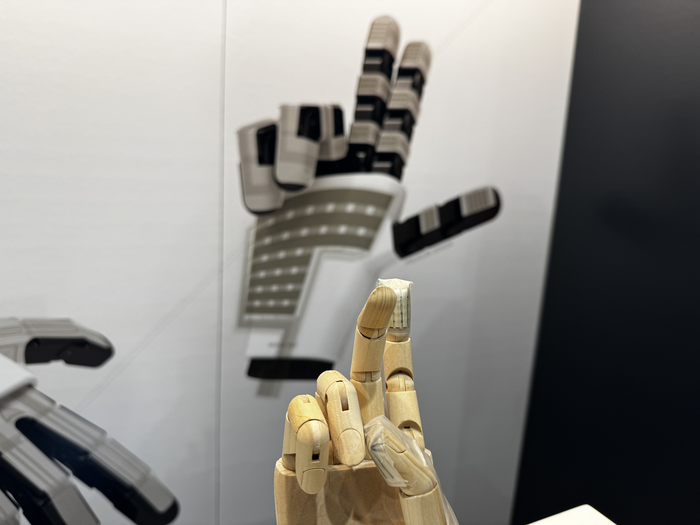
A robot hand strong enough to lift a toolbox is usually also strong enough to crush a tomato, and that gap has kept humanoid hands out of plenty of jobs that require a light touch. Samsung Electronics is testing a possible fix: a 0.5-millimeter electronic skin, developed with Korean startup Midas H&T, that wraps over a robot's fingers and reports back exactly where and how hard they are pressing. The companies showed the technology at Samsung's C-Lab Startup Demo Day on November 10 at the company's Seoul R&D campus, as reported by Seoul Economic Daily.
The film is made of thermoplastic polyurethane embedded with pressure sensors, thin enough to cling to the contours of a robot's fingers "much like a protective film being applied to a car surface," according to the companies. Samsung's RX Business Development Office, the internal unit steering its robotics push, is fitting the skin over robot hands like a glove rather than redesigning the hardware underneath, which keeps the retrofit cheap and fast to test across different hand designs.
Solving the Grip-Force Problem
The pitch is straightforward: when the skin detects contact, it reports the pressure back to the robot's control system, which adjusts grip force on the fly instead of applying one fixed amount of force regardless of what it is holding. Midas H&T chief executive Chang Se-yoon framed the appeal for manufacturers in terms of space rather than just precision, saying the film is "thin enough for precision parts assembly where working space is tight," pointing to electronics assembly lines as a near-term target alongside more delicate tasks like handling produce.
That distinction matters because grip control has been one of the more stubborn problems in humanoid robotics even as arms, legs, and navigation have improved quickly. A hand that can bench-press a crate but can't tell the difference between a steel bolt and a ripe tomato is not useful on a line that handles both. Layering electronic skin over a hand's existing cameras and distance sensors, rather than replacing them, lets Samsung test whether tactile feedback closes that gap without starting the sensor stack over.
Part of a Broader Robotics Build-Out
Midas H&T came up through Samsung's C-Lab Outside program, which incubates startups spun out of or adjacent to the conglomerate before they commercialize independently, and the company says it is now developing the supply chain needed to produce the skin at scale, with production targeted for 2027. The timeline lines up with Samsung's wider robotics ambitions: the company has separately said it plans to unveil a humanoid at next year's CES equipped with what it has called world-class robotic hands, and its Future Robotics and Hand Lab efforts have been assembling the sensing, actuation, and now tactile layers that a commercial humanoid hand would need.
For now, the electronic skin is still a test fit rather than a shipped product, and neither company has disclosed pricing or named manufacturing partners beyond the supply chain work already underway. But the approach reflects a pattern increasingly common among large electronics makers entering robotics: rather than building every component in-house, Samsung is sourcing a specific, hard capability from a smaller startup and testing it on hardware it already controls, betting that tactile sensing, more than raw strength, decides which jobs a robot hand can actually do.