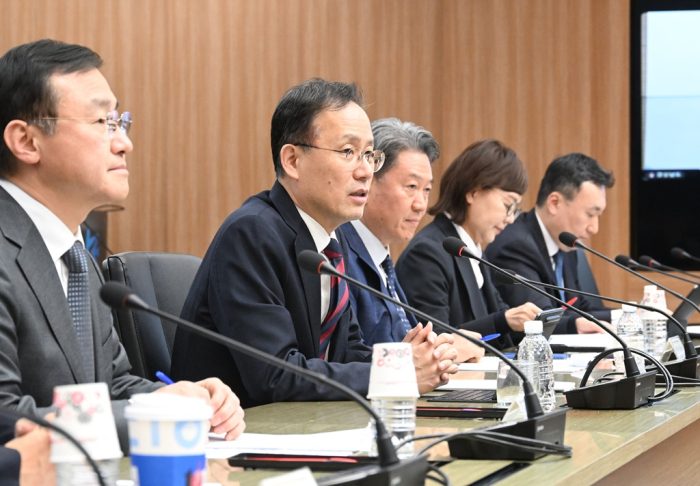
South Korea's Ministry of Economy and Finance approved a 440.2 billion won ($330 million) spending plan to develop critical humanoid robot components domestically, according to an economic ministers' meeting chaired by Finance Minister Lee Hyoung-il on November 11. The goal is to cut reliance on foreign suppliers for parts like actuators and reach 80% localization of key components by 2030.
What exactly is the money for?
The funding targets the component layer of humanoid robotics rather than finished robots: actuators, AI-enabled sensors and batteries engineered specifically for humanoid form factors. These parts are currently sourced heavily from overseas suppliers, and Seoul has identified that dependency as a strategic vulnerability as humanoid production scales up globally.
The 2026 package sits alongside a separate proposal of roughly $39 million in new 2027 funding aimed at the same component categories, suggesting a multi-year, staged approach rather than a single injection of capital.
Why is the government stepping in rather than leaving this to industry?
South Korea already leads the world in industrial robot density, with 1,066 robots per 10,000 manufacturing employees as of the latest IFR figures, more than double second-place Singapore. But humanoid robots pull from a different supply chain than fixed-arm industrial robots, and Chinese manufacturers have moved quickly to vertically integrate actuators, reduction gears and sensors for humanoid platforms specifically.
Seoul's answer is to subsidize the domestic version of that supply chain before Korean robot makers become structurally dependent on Chinese or other foreign component suppliers. The country's largest industrial names, including Hyundai Motor, Samsung Electronics, SK Hynix and LG, are already active in humanoid robot development, and the government funding is designed to pull their component suppliers up the value chain alongside them.
How does this compare to what other countries and companies are doing?
The move mirrors a broader pattern of state-backed humanoid supply chain investment. China has funded humanoid component makers directly through state and quasi-state capital, and Chinese startups building actuators, sensors and robot-specific chips have raised large angel and Series A rounds this year. In the US, JPMorgan has projected humanoid robot output could reach 400,000 units by 2030, with analysts citing component supply, not demand, as the binding constraint.
South Korea's bet is that a smaller, more targeted localization push can let its existing electronics and automotive supply base pivot into humanoid-specific parts faster than a market-only approach would allow. The country's humanoid supply chain has already added a reported $68 billion in market value this year as component suppliers position themselves for the transition.
What should the industry watch for next?
The immediate marker to track is whether Korean component makers can hit interim localization targets before 2030, since the 80% goal implies a steady ramp rather than a last-minute push. The 2027 funding proposal, still pending, will indicate whether Seoul plans to keep scaling support or treat 2026 as the peak of direct government investment in this specific segment.