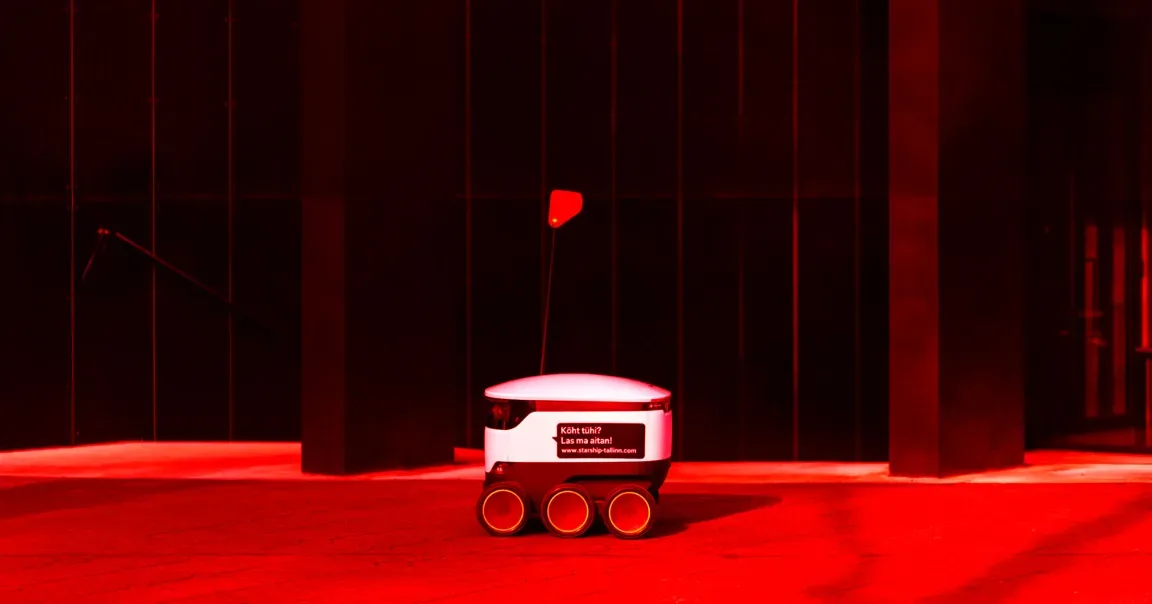
A Starship Technologies delivery robot collided with a city bus during rush hour in Tallinn, Estonia on November 6, injuring nine passengers after the bus driver braked hard to avoid it. The robot had entered the intersection against a "no walk" signal. It then carried on with its delivery route, leaving the scene before officials arrived — an act a Tallinn Transport official described as the robot having effectively "fled" the crash, raising the question of whether the incident legally counts as leaving the scene of an accident. Starship's operations head, Pepe Aaviksoo, blamed bright advertisement boards and nearby traffic lights for disorienting the robot's navigation system, calling it an "exceptional situation," according to Futurism.
Why a Sidewalk Robot Causing a Bus Crash Matters
Delivery robots have spent years selling themselves on being too small and slow to hurt anyone. Nine injuries from a robot-triggered collision breaks that narrative, even though the robot itself never touched the bus — its presence in the crosswalk is what forced the evasive braking. That distinction matters legally but won't matter much to regulators or the public, who will read this as a robot causing a crash.
Tallinn has been one of Starship's flagship markets since 2017, and Estonia has generally been a permissive testbed for autonomous sidewalk delivery in Europe. A navigation failure this public, in a city the company treats as a showcase, undercuts the pitch that these fleets are mature enough for dense urban intersections rather than campuses and suburban cul-de-sacs.
The Competitive and Regulatory Fallout
Starship is not alone in facing scrutiny. Serve Robotics and Coco Robotics have both drawn complaints in US cities — Coco for swarming Chicago sidewalks and blocking wheelchair access, and Uber Eats' delivery robots for provoking a 78-year-old Philadelphia protester into repeated arrests. Starship itself is already defending a lawsuit from a 73-year-old Arizona woman alleging injury from one of its robots. Add a nine-person bus injury event and the pattern shifts from nuisance complaints to a genuine safety record problem.
The trade-off every delivery-robot operator faces is speed of expansion versus intersection-handling sophistication. Companies have prioritized geographic coverage and unit economics — Starship alone claims tens of millions of completed deliveries — over hardening edge cases like glare, ad-board glare, and pedestrian-signal timing in dense traffic corridors. Regulators in cities weighing sidewalk-robot permits, including several in the US still running pilot programs, will likely point to Tallinn as evidence that current perception systems aren't ready for mixed traffic without stricter geofencing or human remote oversight at complex crossings. Expect Starship to face renewed questions from Estonian and EU transport authorities about its incident-reporting obligations, given the robot left the scene rather than stopping.