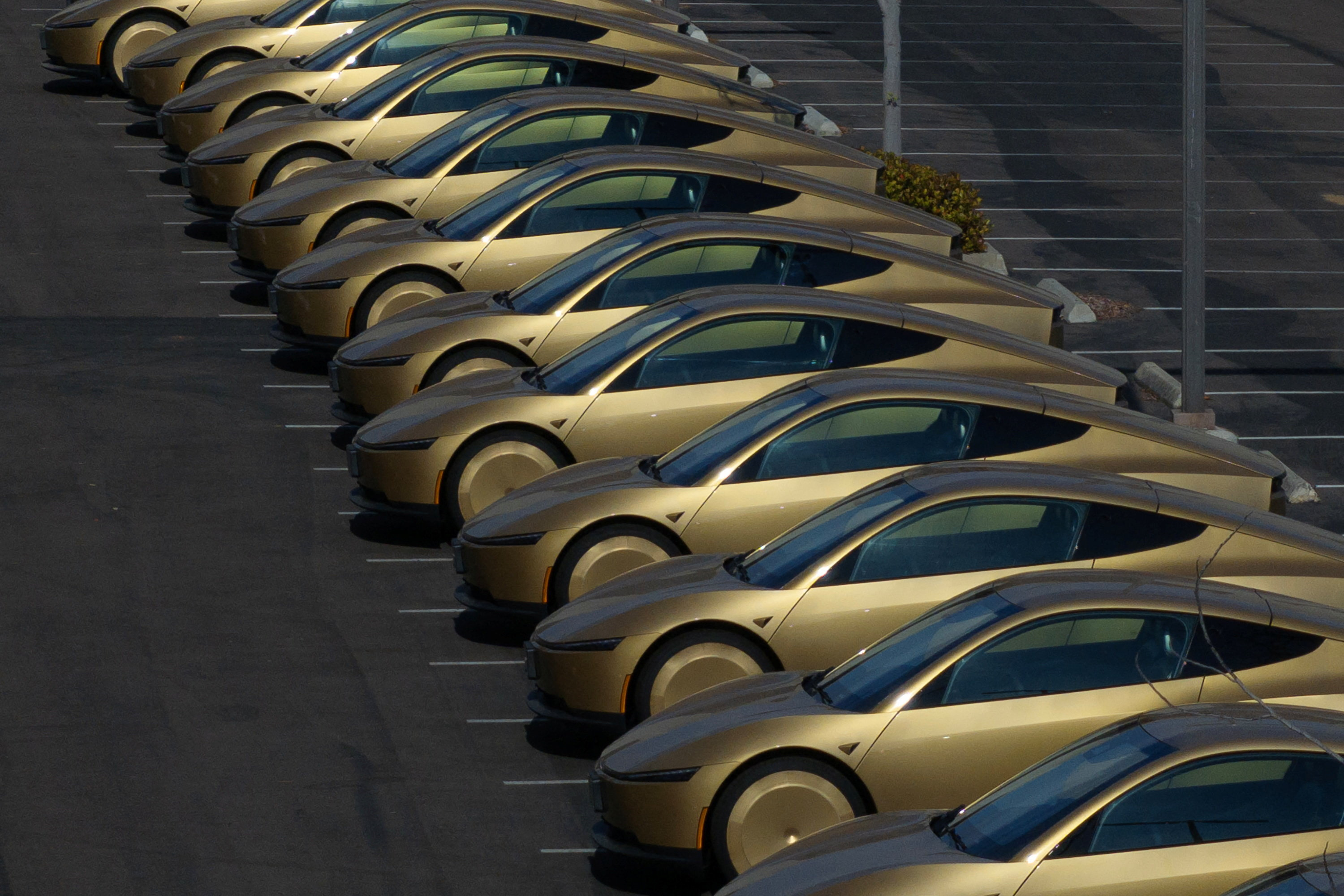
Tesla unveiled the production Cybercab at a launch event in downtown Austin, Texas, on Thursday, September 3, 2026, formally introducing the two-seat, purpose-built robotaxi that will spearhead its autonomous ride-hailing push.
A vehicle built only for autonomy
The Cybercab has no steering wheel and no pedals, riding entirely on Tesla's Full Self-Driving software and the AI4 in-vehicle computer. Chief Executive Elon Musk framed the event as a "chance to experience the future of autonomy," with select attendees offered rides in production units. Musk has publicly targeted a sub-$30,000 price when the vehicle reaches consumers, though prediction markets going into the event gave roughly 17-18% odds that Tesla hits that number this year.
Robotaxi fleet math
The Cybercab reveal comes on top of an already fast-scaling robotaxi footprint. Nevada regulators last month cleared Tesla, Alphabet's Waymo, Uber and Amazon's Zoox to run up to 8,000 driverless vehicles in Clark County, with Tesla drawing the largest allocation of roughly 5,000 permits. Tesla's Cybercab chief engineer told regulators the company expects to field about 2,500 units within the first year. Waymo, meanwhile, has scaled to about 4,000 robotaxis across 14 U.S. cities and is expanding into San Diego, Tampa and Denver, while it has publicly needled Tesla over its camera-only sensor stack in the days leading up to Austin.

Commercial hurdles remain
The September 3 event is a product unveiling rather than an NHTSA authorisation. Tesla still has to prove to city officials and rival operators in Clark County, Austin and other markets that the driverless two-seater can run safely without a human on board. Taxi and livery operators have already warned Nevada regulators that the 8,000-vehicle cap could saturate the "Golden Triangle" between Harry Reid International Airport and the Las Vegas Strip.
The premium on Tesla's stock rests on its ability to turn the Cybercab fleet into an autonomous ride-hailing network, layered on top of Full Self-Driving subscriptions sold to private owners. With production Cybercabs now on display and Uber, Waymo and Zoox racing for the same curb space, the September 3 reveal marks the shift from concept car to competitive product.
Reporting based on coverage from Yahoo Finance, Reuters, TechCrunch and Motor1.