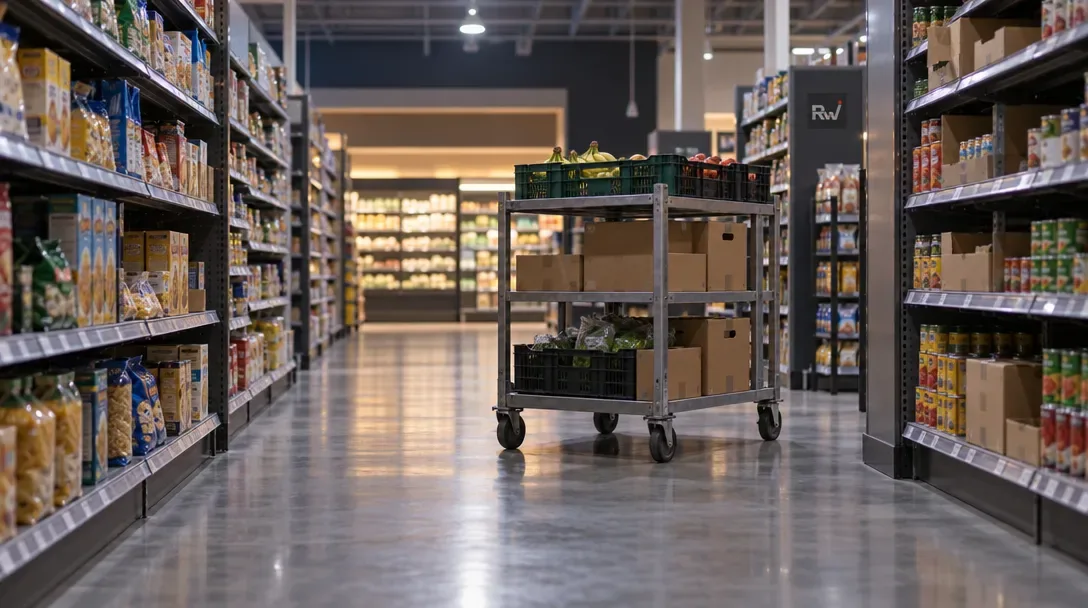
At most supermarkets, the overnight stocking crew clocks in after closing and works until the doors reopen at dawn. Theseus Robotics wants to replace that shift with a machine. The startup emerged from stealth on November 7 as part of Y Combinator's Fall 2026 batch, unveiling Theo, a system that converts off-the-shelf wheeled humanoids into shelf restockers that work while the store is dark and order pickers that work while it is open.
Theseus, led by founder Samarth Malhotra and based between Zurich and San Francisco, does not build its own robot bodies. It writes the operating system and AI models that sit on top of commercially available wheeled humanoids, teaching them to read a store's delivery manifest and planogram, find the correct slot for each product, and rotate older stock to the front. The company claims Theo can restock at up to 400 units an hour overnight and pick online grocery orders at up to 40 units an hour during the day, according to RuntimeWire. Two robots are already running in live stores, and Theseus sells the system as a monthly subscription rather than a hardware purchase, bundling labor with the live shelf-inventory data the robots collect as they work.
A $60 billion labor bill, tackled from the shelf outward
The market Theseus is chasing is large and well documented. More than 100,000 large supermarkets operate across the United States and Europe, and together they spend over $60 billion a year on manual restocking labor, a figure the company cites in its own launch materials. That cost has only grown as grocers add e-commerce picking on top of traditional shelf work, often using the same thin overnight staff for both.
Theseus is explicit that it is not trying to solve every retail robotics problem at once. Its pitch, in the company's own words from the launch post, is blunt: 'lights off at 9pm, shelves full by 9am,' with no structural changes to the store required. Retailer pilots are planned for 2027 across grocery, fashion and drugstore chains in the US, Switzerland and Germany, with Theseus already eyeing an expansion from Zurich to San Francisco.
Crowded shelf, but a narrower lane
Retail has no shortage of robots pointed at inventory problems. Simbe Robotics' Tally and similar shelf-scanning units have spent years rolling down aisles to flag out-of-stock items, but they stop at detection — a human still has to carry the box and do the physical restocking. Warehouse-focused humanoid efforts from Agility Robotics and Apptronik have concentrated on back-of-store tasks like tote handling, not customer-facing shelves. Theseus is positioning Theo in the gap between those two categories: it does not just spot the empty slot, it fills it.
The company's decision to buy rather than build hardware mirrors a broader trend among newer physical-AI startups, which increasingly treat humanoid bodies as a commodity layer and compete on the software stack that makes them useful for a specific job. That approach lowers upfront capital costs but ties Theseus's performance claims to hardware it does not fully control, a dependency that will be tested as pilots move from two stores to dozens in 2027. Whether a 400-unit-an-hour restocking rate holds up on a crowded Tuesday evening shift, rather than in a controlled demo, is the question grocers evaluating the pilots will be asking first.