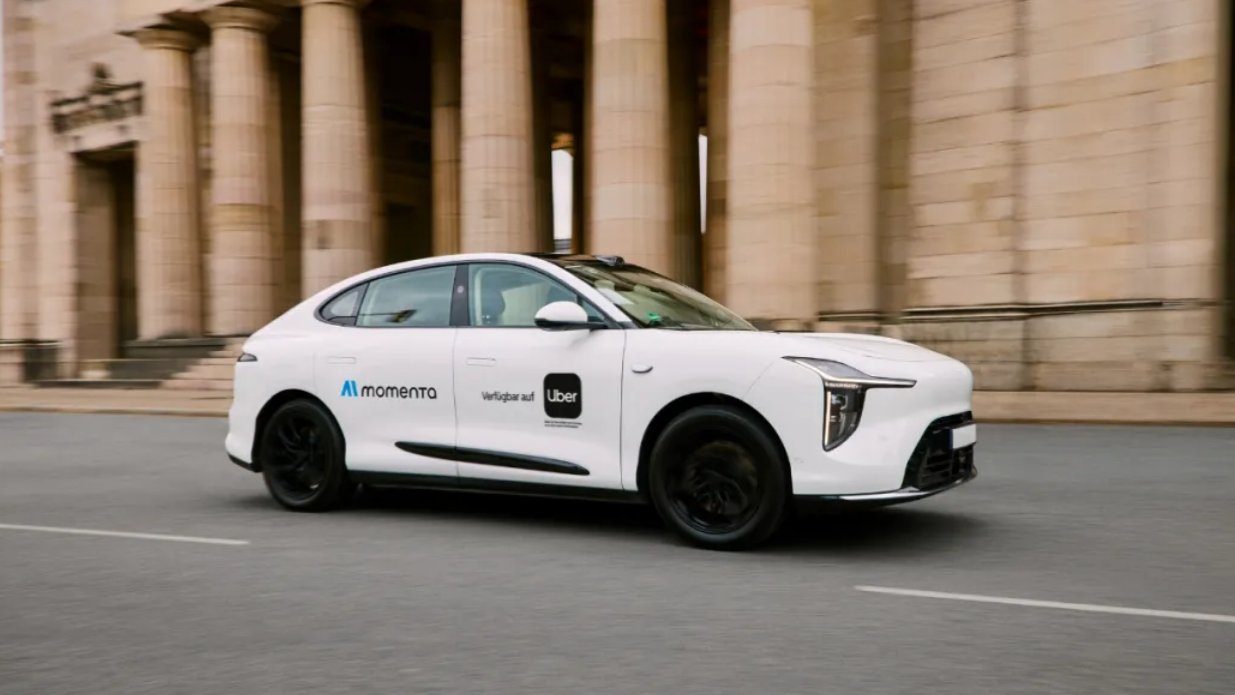
Uber and Momenta switched on a supervised robotaxi pilot in Munich on November 18, giving German riders their first chance to hail an autonomous vehicle through the Uber app. The service covers northern Munich, including the area around Olympic Park, and every ride is free while the pilot runs.
What exactly launched, and where?
Riders in the initial service zone can request UberX, Electric or Comfort and may be matched with one of Momenta's autonomous vehicles. A trained safety operator sits in every car, so this is not a driverless deployment yet. Uber and Momenta say they plan to widen the service area gradually within northern Munich, staying inside the bounds of their regulatory approval, according to CnEVPost.
Why is there still a safety driver, and when does that change?
The operator is required because Momenta's current approval covers supervised testing, not commercial driverless service. Momenta obtained its Level 4 testing permit from Germany's Federal Motor Transport Authority, the KBA, in July 2026. The scope is notable: it covers urban-road testing across the entire country rather than requiring a fresh application for each city. Momenta says it is the first Chinese company to receive that nationwide permit. Neither company has set a date for removing the safety operator in Munich.
Why is a Chinese company running Germany's first robotaxi service?
Momenta built its business supplying advanced driver-assistance systems to automakers, and has run robotaxi operations in multiple Chinese cities for years. That track record, plus the nationwide KBA permit, let Momenta move faster than rivals still working through city-by-city approvals. Momenta robotaxi general manager Xie Shuo said the Munich pilot "provides a foundation for advancing toward a regular service in Germany," while Uber's head of autonomous mobility operations, Samarth Kejriwal, called Germany's regulatory framework "rigorous" and said the launch "sets a high bar for further expansion across the region."
How does this fit into Uber's broader autonomous vehicle strategy?
Uber has spent the past two years stacking partnerships with self-driving operators worldwide rather than building its own stack, pairing with Waymo, WeRide, Pony.ai and now Momenta across different markets. Munich gives Uber its first live robotaxi access point in Germany and one of its first in continental Europe. The timing is notable: it lands the same week Waymo pulled its robotaxis off every US freeway after California's DMV cited recurring safety incursions, a reminder that regulatory goodwill for this category can disappear fast. A clean, incident-free supervised run in Munich would strengthen Uber and Momenta's case for an unsupervised expansion, while any early mishap would hand ammunition to skeptics in a country already cautious about autonomous vehicles on public roads.