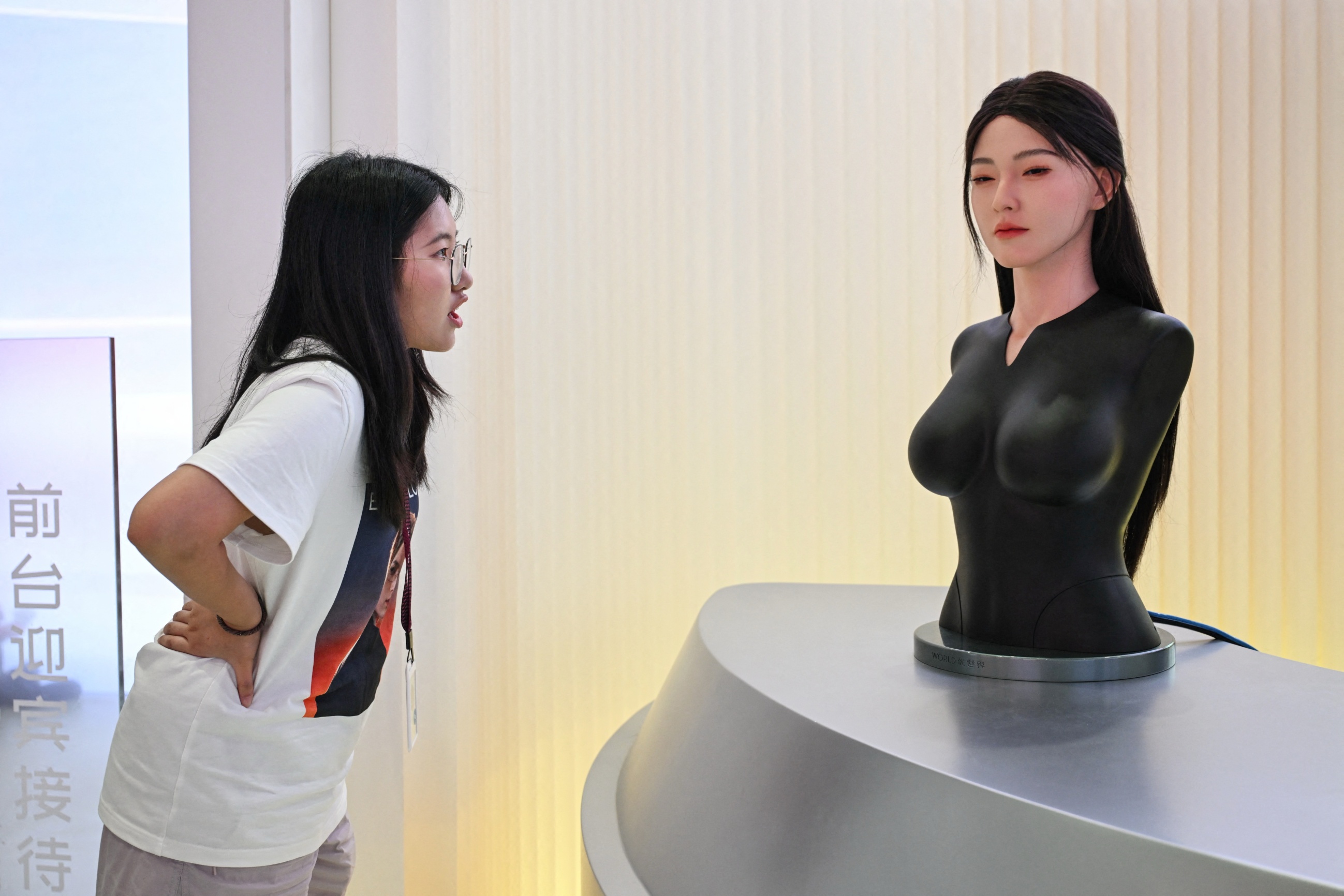
Beijing's second World Humanoid Robot Games ended this week with headline-grabbing sprint records — but the more consequential scorecard is on Chinese factory floors, where UBTECH, Galbot and AGIBOT now hold hundred-million-dollar humanoid orders from BYD, Foxconn, CATL and Airbus.
‘Critical stage’ of commercialization
Speaking at the concurrent World Robot Conference in Beijing, Xu Xiaolan, chairwoman of the Chinese Institute of Electronics, declared the industry had entered “a critical stage of large-scale commercialization and deployment.” UBTECH’s Walker S2 has now accumulated more than RMB 800 million (~$119M) in orders across BYD, Dongfeng Liuzhou, Geely, FAW-Volkswagen, Audi FAW, BAIC New Energy, Foxconn and SF Express. Galaxy General Robotics — the parent of Galbot — won a RMB 236 million (~$35M) procurement bid from CATL, and its wheeled Galbot S1 has been running around the clock at CATL's Ningde HX battery base since acceptance in March 2026. AGIBOT’s G2 logged 140 continuous hours on a consumer-electronics line with a claimed 99.9% success rate at 310 units per hour.

Why VLA architecture is winning the orders
The line between contract winners and demo-stage rivals now runs through control architecture. Vision-Language-Action (VLA) models take camera feed, natural-language instruction and joint states as inputs and output motor commands directly, without task-specific reprogramming when a job changes. Galbot runs three specialised VLA heads — GraspVLA, GroceryVLA and TrackVLA — on the same hardware, layered with a world model that simulates outcomes before actuation. That means a supplier’s box-size change or a new SKU is a language instruction, not a re-engineering project. UBTECH itself has been candid: the Walker S2 is still at most half as efficient as a human worker, but that is enough for hazardous, confined-space or overnight tasks where the alternative is no worker at all.
Shipments, concentration and the shake-out ahead
China shipped more than 40,000 humanoid robots in the first half of 2026, roughly 97% of global units and a 272% jump from a year earlier, according to a report presented at WRC. AGIBOT commands ~44% share, Unitree ~11,000 cumulative units and about 30% share after its blockbuster STAR Market IPO, and Galbot, UBTECH and Leju round out the top five. Embodied AI funding reached RMB 93.5 billion (~$13.9B) in H1 alone, and Morgan Stanley is warning of an “impending shake-out” across the 140-plus Chinese players. Winners are expected to be firms that pair hardware with foundation models and a live deployment-data flywheel — the mix that is already showing up in Galaxea AI’s $290M Series B+, Robotera’s China Post and SF Group deployments and XPeng Robotics’ $900M Series A.
Reporting based on coverage from Tech Times, PR Newswire, CGTN and China Daily.