Xiaomi has released Xiaomi-Robotics-1, a vision-language-action robot foundation model pre-trained on 100,000 hours of real-world manipulation trajectories, publishing open weights, code and checkpoints across Hugging Face, ModelScope and GitHub on August 3, 2026. The paper accompanying the release argues that Xiaomi has, for the first time, produced a clean scaling law for robot policy models by breaking the real-robot data bottleneck with embodiment-free video data.
100,000 hours of UMI data plus 7,200 hours of robot data
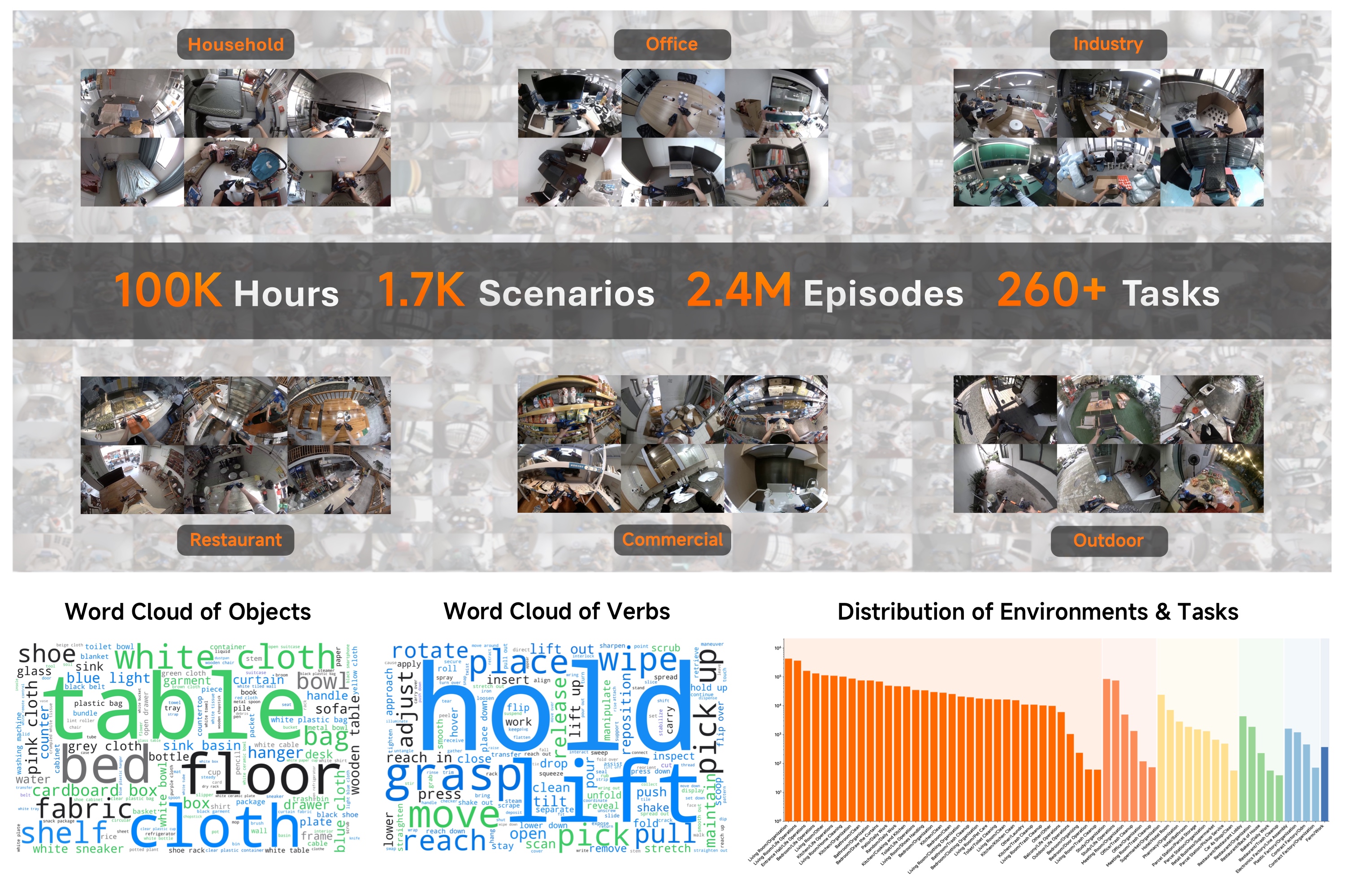
Xiaomi-Robotics-1 combines large-scale embodiment-free pre-training with a modest post-training run on in-house cross-embodiment robot data. The pre-training corpus spans 100,000 hours of UMI (portable-rig) trajectories collected across more than 1,700 scenarios — homes, commercial spaces, industrial sites and outdoor environments — auto-annotated with scene-transition language by a vision-language model. Post-training adds more than 7,200 hours of in-house real-robot data covering tasks like tidying a sofa, sorting a shoe cabinet and putting away kitchenware, plus filtered open robot datasets.
Scaling law that transfers to physical robots
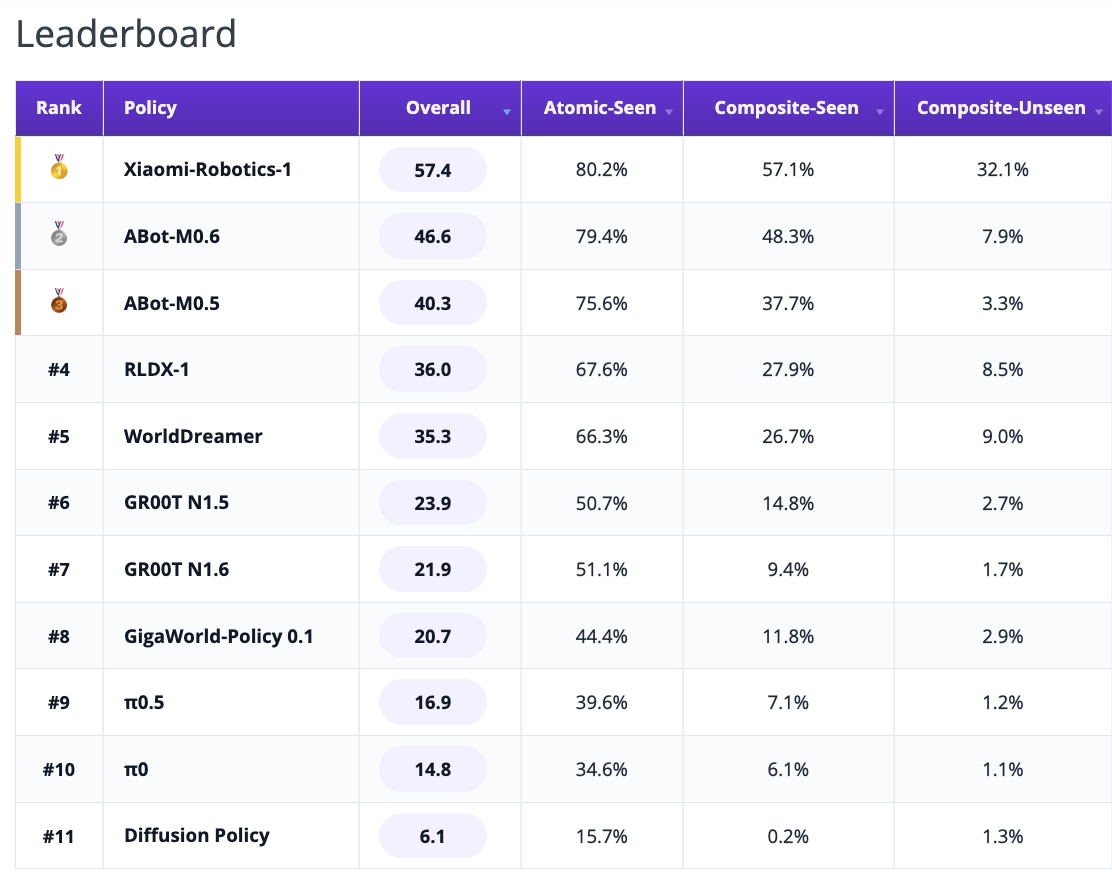
Xiaomi reports that validation action error decreases cleanly as pre-training data and model parameters scale — and, critically, that the improvement carries through post-training to real-robot performance without saturating. On four industry-standard simulation benchmarks the model tops leaderboards: RoboDojo 13.93 (+58.3% vs runner-up), RoboCasa365 57.4 (+23.2%), VLABench 59.1 (+11.1%) and RoboCasa 74.5 (+2.6%).
Efficient adaptation to unseen tasks
In real-robot evaluations of unseen tasks like phone packing, printer refilling and laundry loading, Xiaomi-Robotics-1 reaches 75% overall success from an average of fewer than 10 hours of demonstrations per task — nearly double the 40% scored by the π0.5 baseline at the same data budget. Extending the budget to under 40 hours per task lifts overall success to 85%.
Chinese foundation-model race widens to embodied AI
The release places Xiaomi alongside Chinese robot-foundation-model efforts such as ModelBest's MiniCPM-R for embodied AI and cross-embodiment work at Unitree and AgiBot. It also pressures Western VLA vendors, including Physical Intelligence, and complements NVIDIA's push to establish open world models through the Cosmos Coalition. Xiaomi has been backing embodied-AI startup X Square Robot, which raised a $2.8B Series C earlier this year.
Reporting based on coverage from Xiaomi Robotics, arXiv, Hugging Face, and Tech Buzz China.