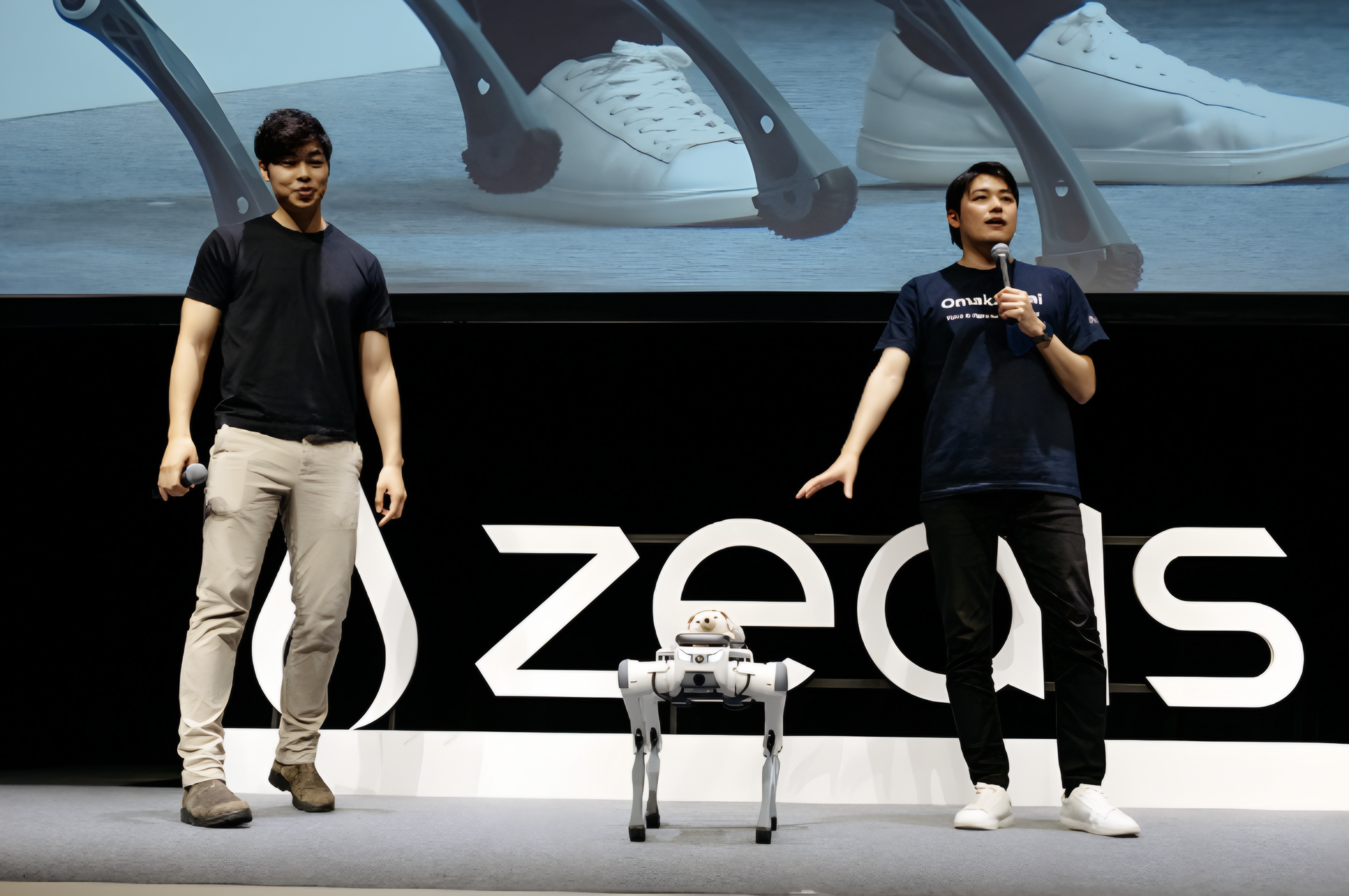
Japanese AI company ZEALS held a press conference in Tokyo on August 5, 2026 and formally unveiled the D1 — a 129 cm-tall, 48 cm-wide wheeled humanoid robot the company describes as Japan's first commercially available humanoid certified through a hospital proof-of-concept. Sales and deployment consultations open immediately at roughly ¥5,000,000 (about $32,000) per unit, targeting hospitals, care facilities, factories, warehouses and hotels struggling with acute labor shortages.
A Humanoid Designed For Japan's Buildings
D1's dimensions were chosen specifically so the robot can pass through standard Japanese doorframes, enter elevators, and navigate the narrow corridors of hospitals and manufacturing floors without requiring costly infrastructure changes. ZEALS opted for a wheeled base rather than bipedal legs to eliminate the risk of falls in patient-facing environments — a design point that separates D1 from bipedal peers such as Figure 03 and the AEON humanoid at BMW Leipzig. Both arms mount high-performance safety sensors intended to limit injury on human contact.

Initial Tasks And Roadmap
At launch D1 is aimed at reception, patrol, guidance, and transport duties — the kind of repetitive, floor-covering work that Japan's shrinking labor pool can no longer staff. ZEALS says dual-arm manipulation tasks will be rolled out later, expanding D1 into materials handling and light assembly. ZEALS runs the field-data pipeline itself, meaning each deployed robot feeds behavioral data back into the D1 fleet, an approach that parallels physical-AI training loops such as China's factory-scale humanoid rollouts.
Why It Matters
Japan's humanoid market has long trailed U.S. and Chinese peers on commercial rollouts, with domestic effort concentrated in research labs and industrial arms. A hospital-certified, ready-to-ship wheeled humanoid at ¥5 million puts the country back on the map for service-robotics deployment — and gives ZEALS, previously known for conversational commerce software, a physical-AI franchise built for the Japanese building code. Expect early orders from senior-care operators and prefectural hospital networks, with factory and hospitality follow-ons through 2027.
Reporting based on coverage from XenoSpectrum, TechTimes, Robotic Gizmos and ZEALS press materials.