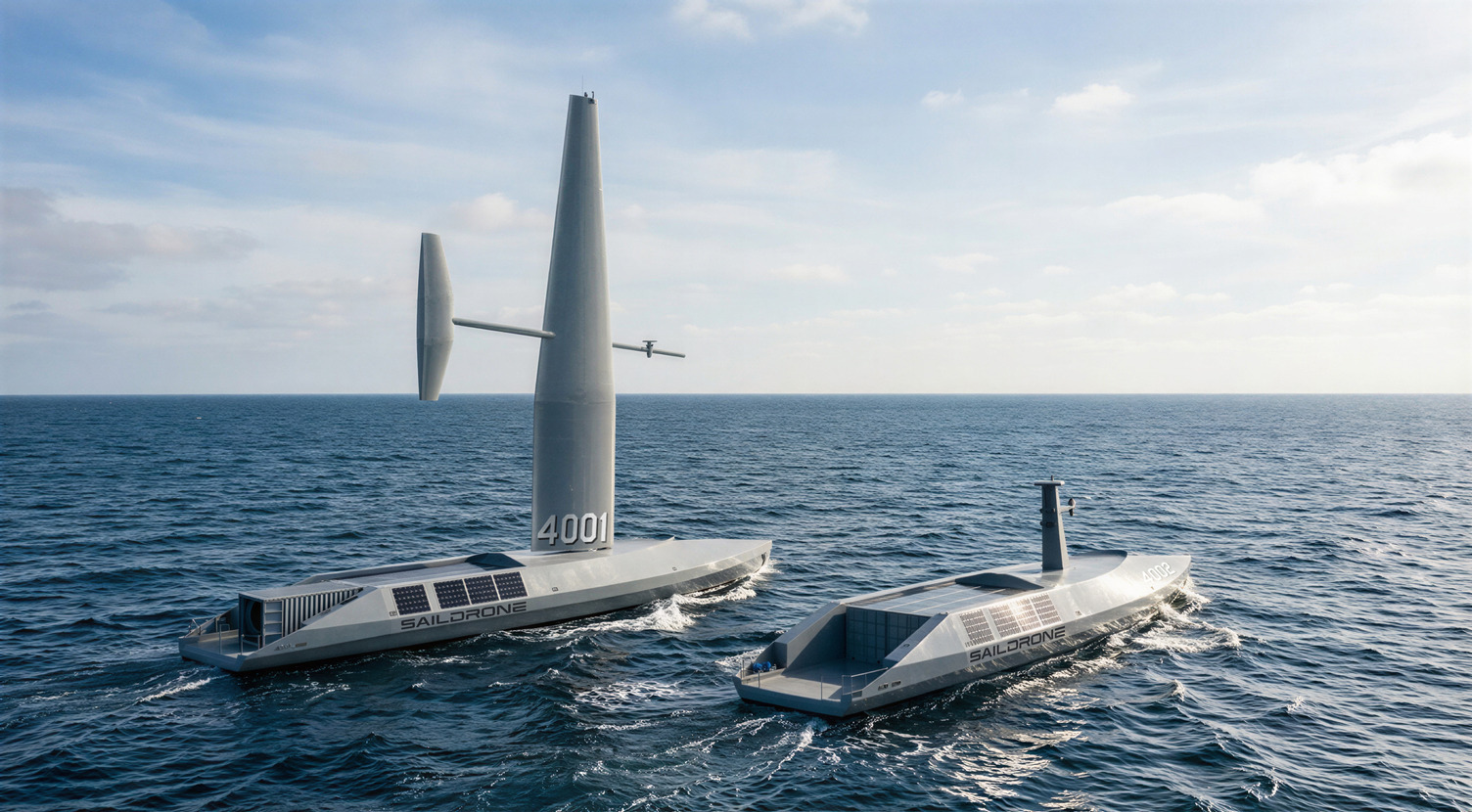

Saildrone's biggest USV to date
Saildrone used the Sea-Air-Space 2026 expo on April 20 to take the wraps off Spectre, a 52-meter (170-foot) unmanned surface vessel that is by far the largest, heaviest and fastest platform the Alameda-based company has built. At 250 tonnes and capable of sustained speeds above 30 knots, Spectre is engineered as a long-endurance medium USV (MUSV) for anti-submarine warfare, intelligence/surveillance/reconnaissance and strike missions.
A two-year build with Lockheed Martin
Spectre is the product of a $50 million October 2025 partnership with Lockheed Martin and was designed to host Lockheed's existing combat-systems payloads. That includes thin-line towed-array sonars such as the TB-29 for sub-hunting, and the Mk70 vertical-launch module for surface- and land-strike missiles. Two variants — one with a wing sail for ultra-long-endurance sentry missions and one without — will be built at Fincantieri Marinette Marine's Green Bay, Wisconsin yard, which can produce around five Spectres a year.
Inside the Navy's medium-USV competition
Spectre is one of seven designs the U.S. Navy selected for its MUSV Marketplace evaluation, alongside platforms from Saronic, HII, Hanwha and others — read more on the Saronic Marauder launch at saronic-marauder-musv-launch-franklin-shipyard. The MUSV Marketplace runs at-sea demonstrations from June through October 2026; vessels that complete the milestones receive $15 million and become eligible for follow-on production contracts.
Capabilities and timeline
Saildrone is positioning Spectre as an "ultra-quiet" ASW platform — its diesel-electric, hybrid-sail propulsion package is optimized to keep acoustic signatures low while loitering for weeks at a time. Sea trials are planned for early 2027. The unveil also fits a wider trend of U.S. capital scaling autonomous-warship production, as the Navy works toward a hybrid fleet that pairs crewed combatants with large, persistent unmanned platforms.
Why it matters
Spectre takes Saildrone's small-USV pedigree — best known for ocean-science Voyagers and Surveyors — and pushes it firmly into combatant-class hardware. Pairing Saildrone's autonomy stack with Lockheed Martin's combat-system payloads gives the U.S. Navy a credible domestic option as it tries to scale unmanned ASW and strike platforms faster than any post-WWII shipbuilding push.
Reporting based on coverage from Saildrone press releases, Naval News, USNI News and Lockheed Martin.