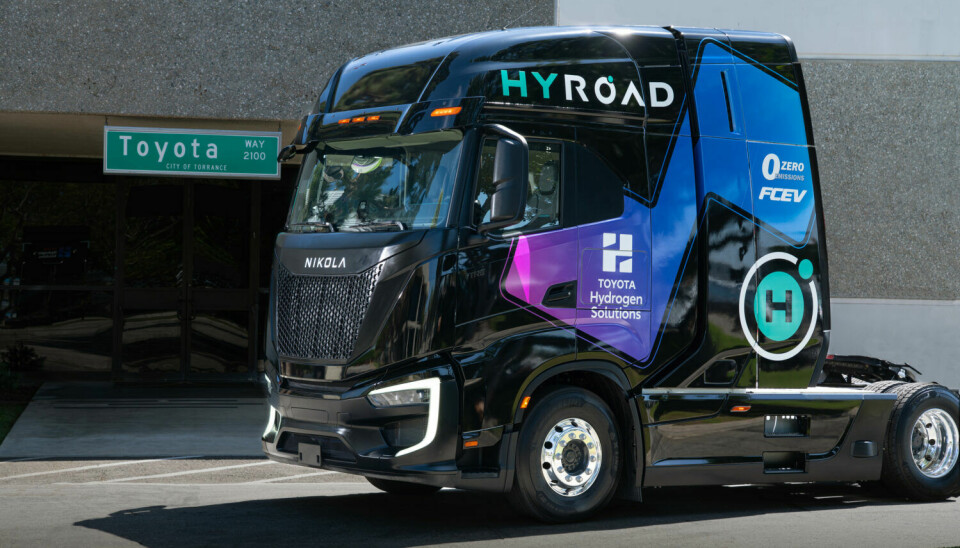

Toyota Motor North America and hydrogen-trucking operator Hyroad Energy have signed a definitive agreement to deploy 40 hydrogen fuel-cell Class 8 commercial trucks across Southern California. The deal, announced at the ACT Expo in Anaheim, gives Toyota's logistics network one of the largest single hydrogen heavy-duty fleets in the United States and marks the first major commercial use of trucks that Hyroad acquired from the bankrupt Nikola Corporation in 2025.
The structure of the deal
Under the agreement, Hyroad will own and operate the trucks and provide maintenance, telematics and fleet-management software, with Toyota supplying the hydrogen fuel from its own refuelling station currently under construction in Ontario, California. The bundled commercial model — vehicles plus fuel plus uptime services in a single contract — addresses the operating complexity that has slowed broader fleet adoption of fuel-cell trucks.
What the trucks can do
Each Class 8 fuel-cell tractor delivers an estimated 500 miles of range per fill and refuels in roughly 15–20 minutes — numbers that hydrogen advocates argue make it the only zero-emission option for long-haul drayage and regional freight where battery-electric trucks struggle on duty cycles and recharge time. The deployment will begin with routes around the Ports of Los Angeles and Long Beach.
Why Hyroad matters
Hyroad is unusual: an OEM-agnostic operator rather than a manufacturer. In August 2025 it acquired 117 hydrogen fuel-cell trucks, spare parts, software platforms and IP from Nikola's Chapter 11 auction. The Toyota agreement is its first publicly disclosed deployment at scale and validates the bet that Nikola's hardware can have a second life under more disciplined operators.
Broader hydrogen momentum
The Toyota–Hyroad deal lands as the hydrogen-truck market accelerates from multiple directions. China's Dongfeng has rolled out a 400 kW fuel-cell stack for 49-tonne tractors, Hyundai launched its 2027 Xcient fuel-cell truck earlier in May, and Volvo unveiled a hydrogen combustion concept. Industry analysts at IHS Markit estimate Class 8 fuel-cell sales will exceed 5,000 units globally in 2026.
What to watch
The next milestones are the activation of Toyota's Ontario refuelling station and the first revenue-generating loads. Toyota has separately said it intends to operate its own fuel-cell Class 8 fleets directly in commercial service by early 2027. Beyond the Hyroad partnership, the company's broader hydrogen ecosystem play spans stationary power, port equipment and passenger vehicles.
Reporting based on coverage from Toyota Newsroom, PR Newswire, Clean Trucking and Electrek.