The U.S. Army Medical Research and Development Command has unveiled a wearable rehabilitation brace designed to keep wounded troops mobile when evacuation is impossible. The Intrepid Battlefield EXoskeleton (IBEX), announced on May 28, 2026, stabilizes lower-leg injuries such as tibia fractures while bearing a service member's full body weight, allowing the injured soldier to stand and walk independently.
Self-evacuation under fire
According to the Army, traditional litter evacuation requires two to four service members plus a security team, temporarily removing several troops from the fight and raising their exposure to enemy fire. IBEX is intended to flip that equation: instead of being carried out, a walking wounded soldier can move themselves to safety. "The IBEX enables more walking wounded, which means more warfighters putting bullets downrange while providing a smaller target for enemy drones to attack," said Dr. Lee Childers, senior scientist at the Extremity Trauma and Amputation Center of Excellence Military Performance Lab.
Seven pounds, drone-deployable
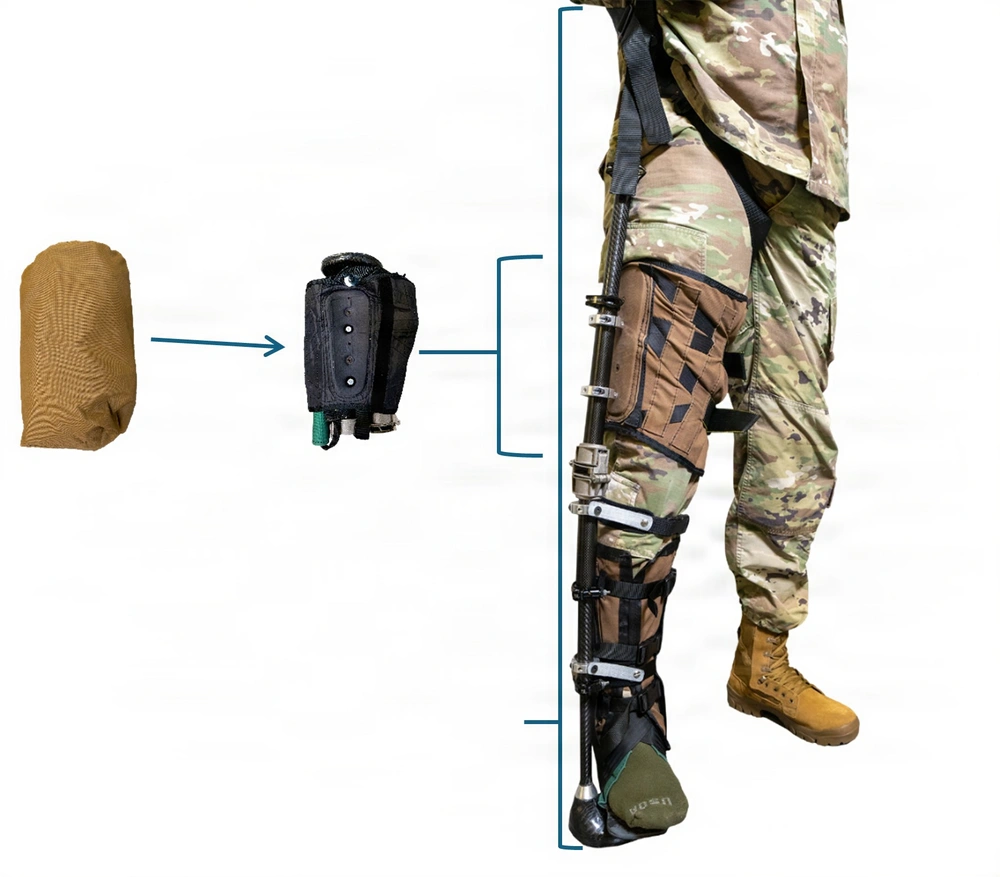
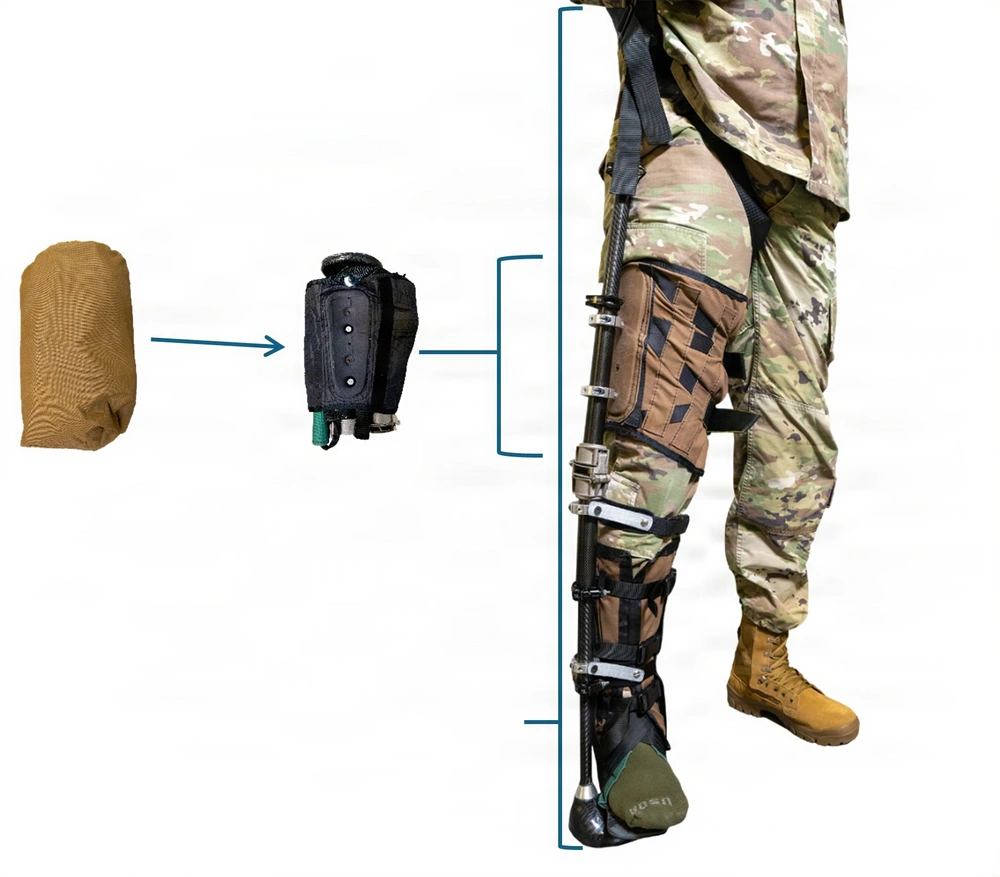
The collapsible system weighs about seven pounds and packs down to roughly the size of a one-liter water bottle—about 6 inches wide, 7 inches deep and 15 inches long—so it can be carried by medics or fellow troops into difficult terrain such as dense woods or rocky mountainsides. The device has also survived a 400-foot drop from a cargo drone to a service member waiting on the ground, a capability the Army says is essential for resupplying isolated units.
How the brace works
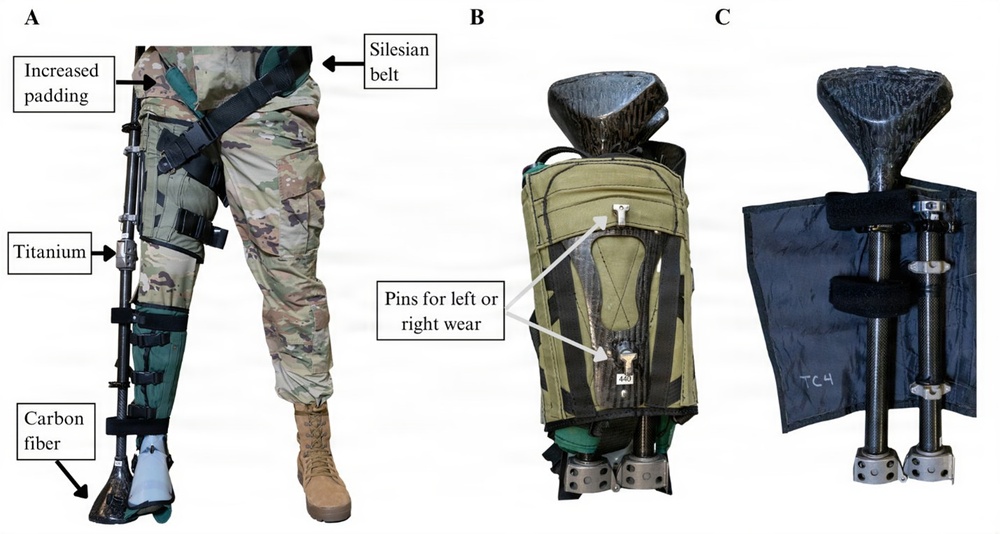
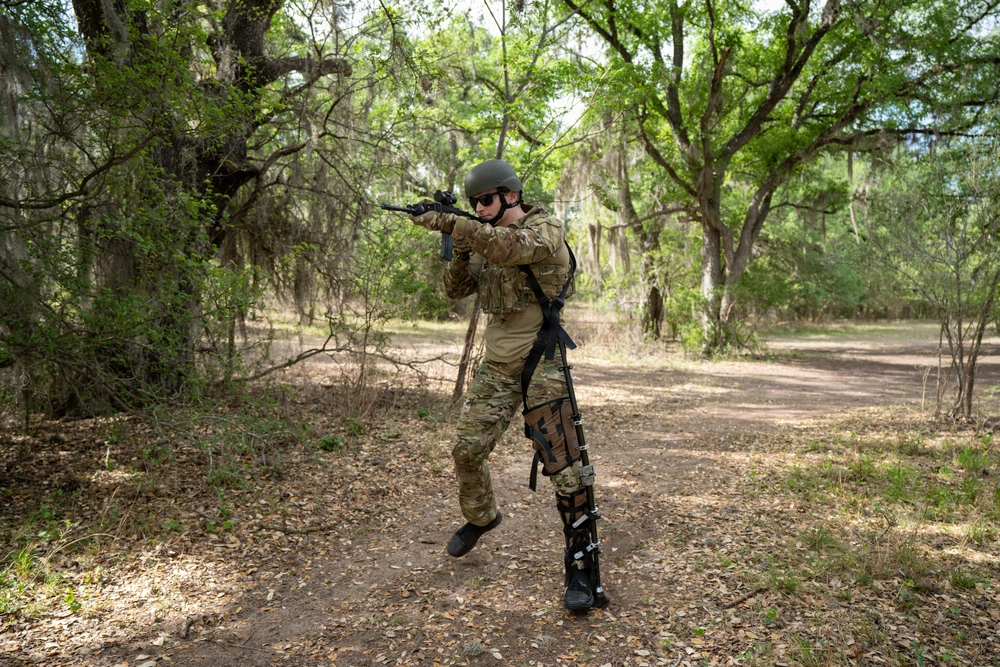
IBEX combines a telescoping lateral frame, a harness that holds the hip, a thigh corset, a knee joint, a fracture splint around the lower leg, and a walking boot with a rocker-bottom sole. By isolating the injured limb from the load-bearing frame, IBEX relieves pressure on soft tissue, nerves and blood vessels to reduce pain and prevent further damage while the wearer moves. It is also designed to let a casualty drop into and rise from a prone firing position, similar work to DARPA's effort to build swarming robot medics for the battlefield.
Battle-tested combat injuries
The Army points to data from the National Library of Medicine showing that more than 22,000 non-amputated lower-leg injuries were sustained by deployed service members between 2001 and 2018, including nearly 9,000 to the lower leg and ankle. About 68 percent of all extremity injuries were open wounds or fractures, often caused by gunshots, improvised explosive devices and rugged terrain—exactly the prolonged field-care scenarios IBEX was designed for. The system follows other recent rehabilitation breakthroughs such as the exoskeleton trial that helped paralyzed patients walk again in a Swiss hospital.
Path to fielding
Begun in 2020, the IBEX program is now on its third round of funding and has produced a fifth-generation prototype, with each iteration smaller, lighter and more capable than the last. The U.S. Army, Navy and Marines have completed field tests, and the device has been licensed by a commercial partner to move toward manufacturing. The next round of testing is scheduled for early next year at the Extremity Trauma and Amputation Center of Excellence research grounds near Brooke Army Medical Center in San Antonio, Texas. The push reflects how rapidly the Pentagon is fielding new battlefield robotics, alongside contracts like Perennial Autonomy's $500M counter-drone award.
Reporting based on coverage from the U.S. Army Medical Research and Development Command (DVIDS) and Army Times.