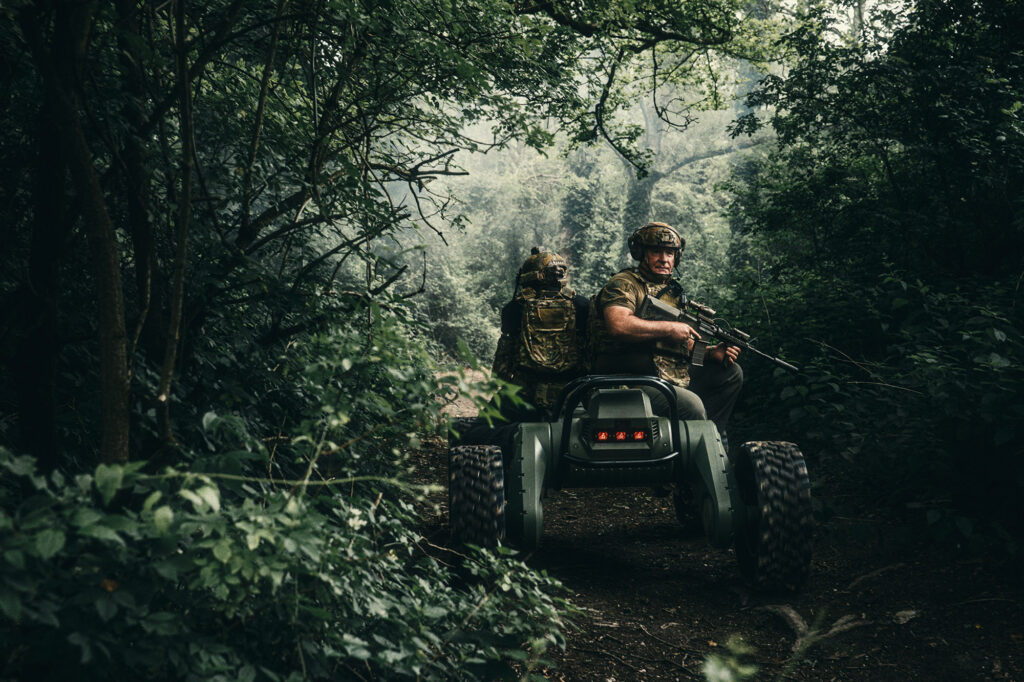
VisionWave Holdings has launched VARAN, a new uncrewed ground vehicle built to operate autonomously in GPS-denied and jammed conditions, unveiling the platform at the Eurosatory 2026 defense exhibition in Paris and pitching it as a direct response to lessons learned on the battlefield in Ukraine.
A robot that doesn't give away its position
Most ground robots rely on active radar, laser scanning or a constant radio link to sense their surroundings — each of which emits a signal an adversary can detect and target. VARAN is instead designed to navigate using cameras, thermal imaging and 3D vision alone, planning its route onboard and continuing to operate with no link back to the operator when required. "We started from the operator in the field, not the engineer in the depot," said Jeremy Williman, the British inventor of VARAN and managing director of VisionWave UK and Europe. "The result is a platform that keeps working when the link drops, the GPS dies, or the ground gets trickier."
One chassis, eight missions
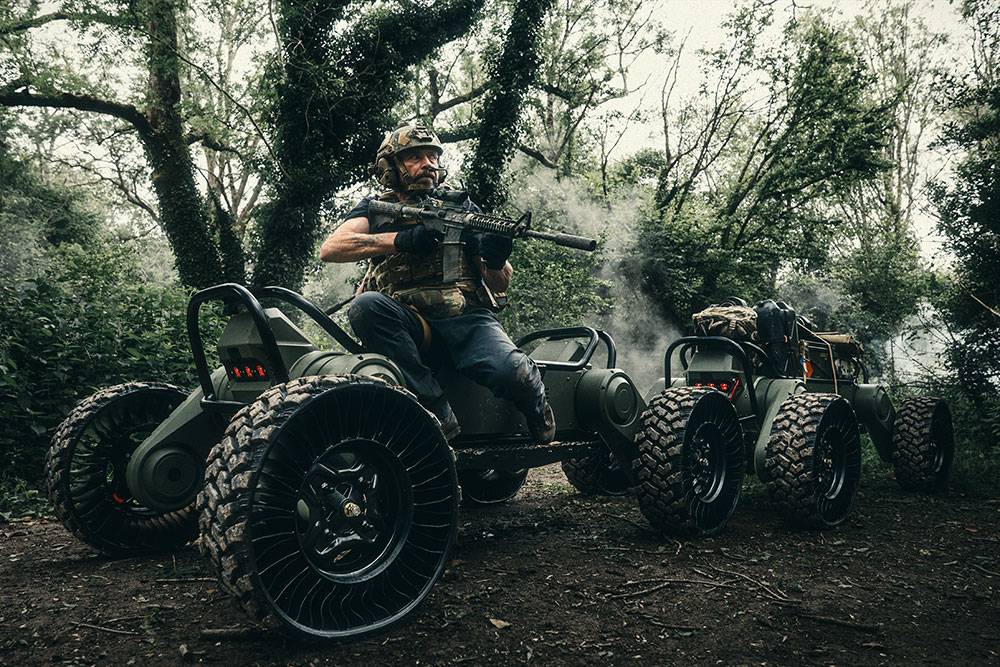
A height-adjustable chassis on extendable wheel arms automatically changes the vehicle's stance to suit the terrain, letting it run low and fast at up to 45mph (72km/h) across open ground, then rise to clear water, rubble and urban obstacles. Each wheel drives independently, so it can turn on the spot in tight spaces. VARAN can carry up to 400kg and tow more than 1,000kg, and a single chassis can be re-tasked in the field across ISTAR, air defence, counter-UAS, casualty evacuation, logistics, route clearance, force protection, electronic-warfare support and forward observation.
Flagship of the STRATUM ecosystem
Engineered in the United Kingdom with manufacturing planned through local partners, VARAN is offered as an open platform that lets adopting nations fit their own sensors, embed national cryptography and own their through-life support. It is the flagship of VisionWave's STRATUM ecosystem, a connected family of air and ground platforms, counter-drone capability and passive sensing systems coordinated by a central STRATUM AI layer. The launch adds to a busy Eurosatory 2026, where unmanned systems dominated alongside debuts such as AeroVironment's backpackable UGV, KNDS and Helsing's containerised drone launcher and Red Cat's Hellcat small UAS.
Reporting based on coverage from VisionWave Holdings and Eurosatory 2026.