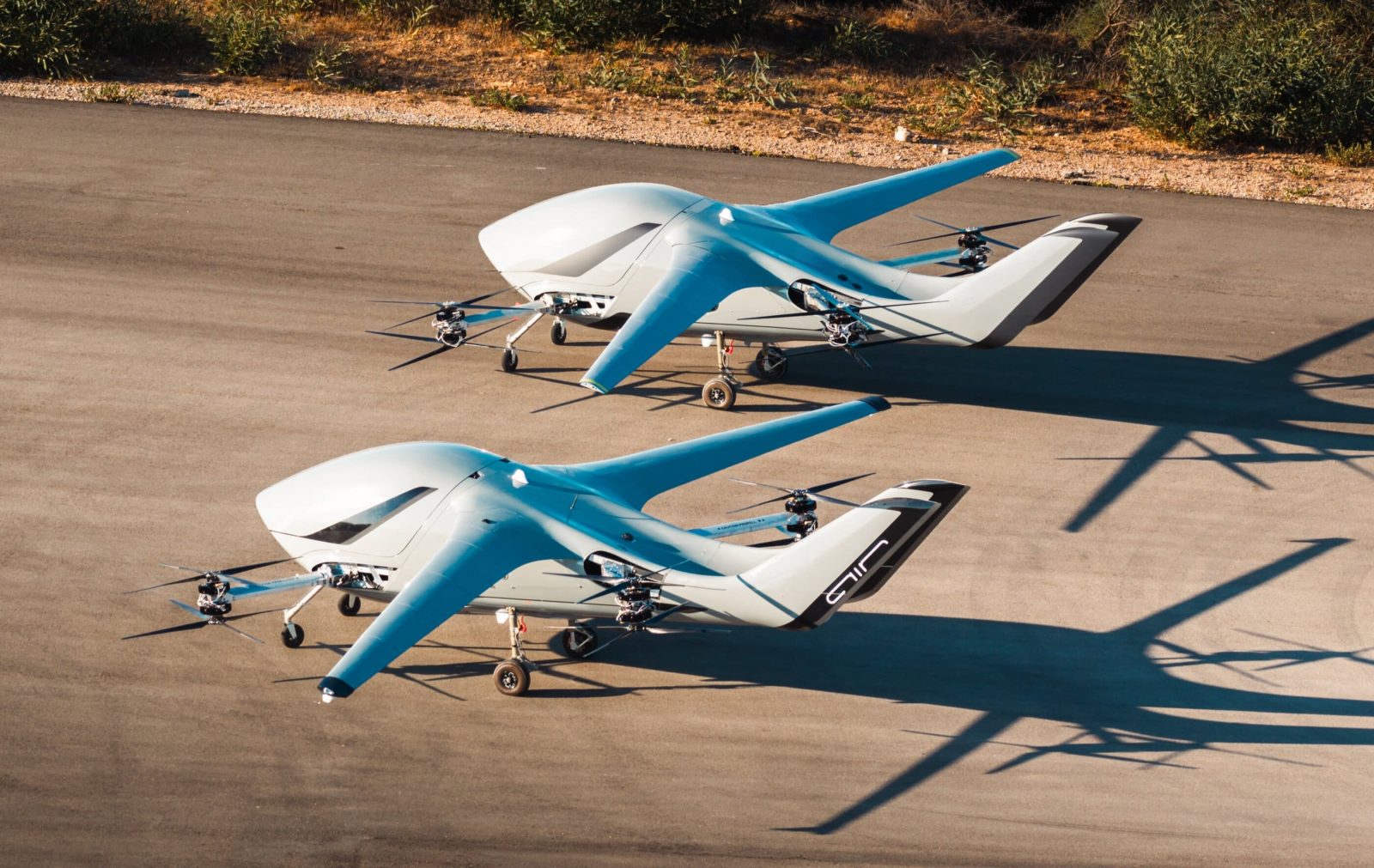
Israeli aerospace company AIR VEV has shipped its first AIR 120D autonomous cargo eVTOL to its new US headquarters in Auburndale, Florida, the company announced November 16, 2026. The uncrewed aircraft carries up to 550 pounds of cargo in a 70-cubic-foot bay and needs no runway, and it will now undergo flight demonstrations at the state's SunTrax testing facility aimed at both military and commercial customers.
Key takeaways
- The AIR 120D carries up to 550 pounds of cargo in a 70-cubic-foot bay and takes off and lands vertically, without a runway.
- AIR VEV classifies the aircraft under the US Department of War's Group 4 UAS category, positioning it for military resupply missions.
- The company has logged more than two years of flight development, including hundreds of test flights, since its first production flight in April 2026.
- Testing is based at Florida's SunTrax facility with support from the Florida Department of Transportation.
- Target missions include final-mile military resupply, maritime logistics, remote delivery and humanitarian aid in infrastructure-limited areas.
CEO and co-founder Rani Plaut said bringing the aircraft to Florida was "a concrete step toward putting that infrastructure to work," referring to the state's growing advanced air mobility testing ecosystem. SunTrax, built originally to test connected and autonomous ground vehicles, has increasingly drawn eVTOL and cargo-drone developers looking for controlled airspace outside the congestion of major test ranges.
A crowded field chasing the same gap
AIR VEV's cargo eVTOL enters a market already populated by well-funded rivals. Elroy Air's Chaparral has secured contracts including a recent order from Abu Dhabi's Barq Group for 20 autonomous cargo drones, while Merlin Labs is pushing autonomy retrofits for crewed cargo aircraft like the C-130J toward real flight testing. What distinguishes the AIR 120D is its combination of vertical takeoff, a 550-pound payload and a cargo bay sized for standard military and commercial containers, a middle ground between small delivery drones and fixed-wing cargo aircraft that require prepared strips.
The Pentagon's interest in distributed logistics, feeding small units operating beyond established supply depots without risking convoys or crewed aircraft, has become a recurring driver of cargo-drone investment this year. AIR VEV is betting that a runway-free aircraft able to operate from forward positions or ships fills a gap neither traditional airlift nor smaller delivery drones can cover.
What happens next
AIR VEV says the Florida demonstrations will evaluate both military and commercial cargo scenarios, with the company drawing on development history and customer feedback gathered since its first flight earlier this year. The outcome of these tests, and any resulting orders, will determine whether the AIR 120D can move from demonstration flights to the kind of production contracts its competitors have already begun locking in. For now, the aircraft's arrival in Florida marks the first time the platform has flown on US soil, a prerequisite for any Pentagon or FAA-regulated commercial deal going forward.