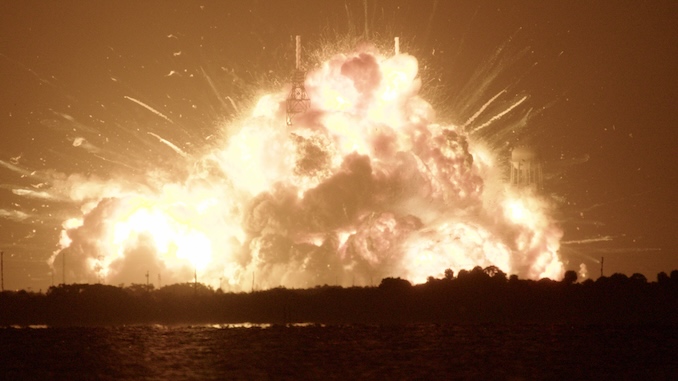
Blue Origin has pinpointed a failed liquid-oxygen valve on a single BE-4 engine as the cause of the May 28 static-fire explosion that destroyed a New Glenn first stage and heavily damaged Launch Complex 36 in Florida, CEO Dave Limp said in a social-media update on August 6, 2026.
What went wrong
The rocket was being readied for its fourth orbital flight, a mission that would have carried 48 Amazon Leo satellites (the payload was safely off-site). Blue Origin's investigation, aided by hardware recovery and component-level hotfire testing, traced the anomaly to the main LOX valve on one of the seven BE-4 engines that power New Glenn's first stage. Each BE-4 produces 640,000 pounds of thrust burning liquid methane and liquid oxygen.
The fix
Blue Origin is producing a modified valve that can be retrofitted into existing BE-4 engines, with the updated hardware expected to be ready by the end of August. Limp said fault-tree analysis is continuing in parallel and that the company still hopes to return New Glenn to flight before the end of 2026.

Ripple effects at ULA and NASA
The BE-4 also powers United Launch Alliance's Vulcan Centaur, which uses two engines on its first stage. A ULA spokesperson told Spaceflight Now that Blue Origin will retrofit the modified valve on Vulcan engines at both Decatur, Alabama and Cape Canaveral. NASA is separately watching the timeline: the agency needs New Glenn to fly a Blue Moon Mark 1 cargo lunar-lander demonstration mission, which has now slipped from late 2026 to Q1 2027 at the earliest.
Related coverage: SpaceX NSSL Phase 3 Lane 1 award, NASA Roman Space Telescope on Falcon Heavy, Falcon 9 upper stage lunar impact.
Reporting based on coverage from Spaceflight Now, Reuters/US News, The Register and AIAA.