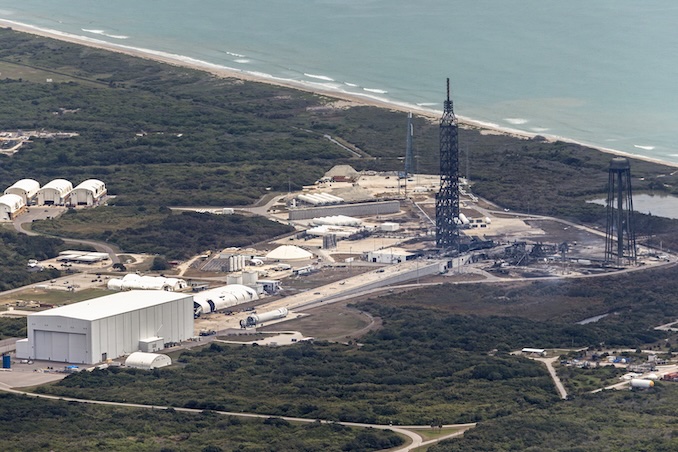
Blue Origin says it will fly the New Glenn rocket again before the end of 2026, despite the spectacular explosion that destroyed a fueled vehicle and damaged Cape Canaveral's Launch Complex 36 during a pre-flight engine test on May 28. CEO Dave Limp delivered the timeline in an overnight post on X on June 3, after the company's first detailed look at the pad.
Damage less severe than first feared
The New Glenn that exploded on pad 36 was destroyed along with its transporter-erector, but Limp said the rest of the launch infrastructure largely held up. "The propellant farm, oxygen, liquid hydrogen and LNG tanks are all in good shape," he wrote. "This is good luck because these are very long lead items. The water tower is also good. The big support tower is damaged, but it can be repaired in place rather than torn down and replaced."

Another New Glenn first stage booster and three upper stages parked in the integration facility at the base of the pad also "look good" after the blast, Limp said. The company had already been working to retire the transporter-erector in favor of a vertical assembly capability, so it will skip the replacement and go directly to that architecture.
What blew up
The May 28 test was a hot-fire ignition meant to clear New Glenn's seven BE-4 first-stage engines for the NG-3 mission, which had been scheduled for June 4 to launch a batch of 49 Amazon Leo broadband satellites (the Leos were not aboard for the test). As the engines lit and throttled up, a fire broke out at the base of the booster and within moments the rocket erupted in a fireball visible across the Florida peninsula. The blast destroyed at least one lightning protection tower at LC-36 and the transporter-erector itself.
NASA pressure mounts
The pad is a single point of failure. Unlike SpaceX, which operates two pads in Florida and one at Vandenberg, Blue Origin currently has only LC-36 in operation, with second pads at the Cape and at Vandenberg still under construction. That makes the speed of the LC-36 rebuild critical for NASA's Artemis program: the agency needs both Blue Origin's and SpaceX's lunar landers in Earth orbit next year for rendezvous tests with Orion, ahead of a target astronaut Moon landing in 2028.
NASA administrator Jared Isaacman said "Blue Origin leadership has responded incredibly quickly" and that the agency would help with root cause analysis and pad recovery, while Kennedy Space Center director Brian Hughes told Space Florida this week that NASA is "doubling down on the lunar lander." The fact that Limp is publicly committing to a return to flight in 2026 also suggests the explosion is not yet being pinned on a deep BE-4 engine flaw - good news for United Launch Alliance, which uses BE-4s on its Vulcan rocket.
The setback comes as the broader launch market is moving at full tilt, with SpaceX flying its first Starship Version 3, SpaceX preparing a record $75B IPO, Impulse Space raising $500M, and Muon Space unveiling Condor-Ultra orbital data centers.
Reporting based on coverage from Spaceflight Now and Blue Origin's public statements.