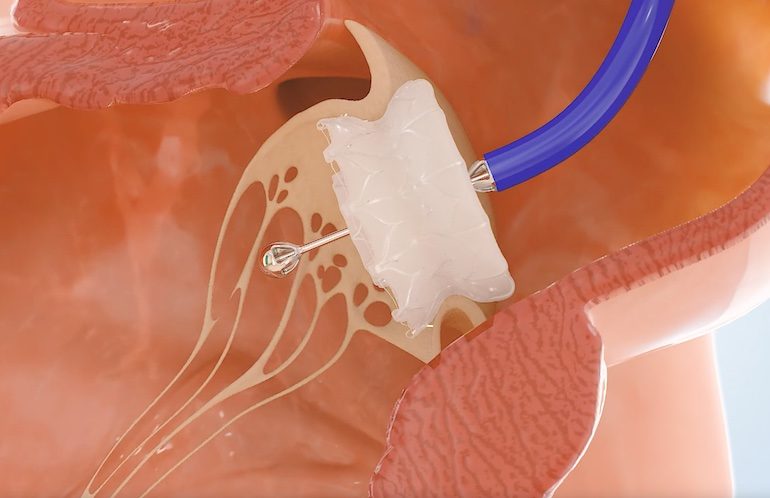
Capstan Medical said on November 16 that it completed the first US procedure using its investigational robotic mitral valve replacement system, performed on November 9 at The Christ Hospital in Cincinnati, Ohio. The case was carried out under an FDA-authorized early feasibility study and led by Santiago Garcia, MD, director of the hospital's Structural Heart Program.
What makes this procedure different from standard heart valve surgery?
Capstan's Compass system pairs a flexible, multi-axis catheter with robotic navigation and a novel valve implant. A physician guides catheter movement, valve positioning and deployment with a handheld controller rather than the knobs and wires used on earlier transcatheter devices. The implant is delivered through blood vessels, so the procedure avoids opening the chest or stopping the heart.
The intended patients are people with mitral regurgitation, a leaking heart valve, who are considered too high-risk for conventional open-heart surgery. Dr. Garcia said the robotic platform is built to provide catheter stability and precise control during positioning and deployment, according to Santa Cruz Works. The patient was discharged home in stable condition days after the procedure.
How does this fit into Capstan's broader timeline?
Capstan, founded in Santa Cruz, California, in 2020, first used the Compass system in humans in March 2025, when surgeons implanted the valve in two patients at Hospital Clínico Universidad Católica in Santiago, Chile, eliminating mitral regurgitation in both cases without obstructing blood flow out of the heart. The November 9 case marks the device's debut on US soil and its entry into a formal FDA-authorized feasibility study rather than a one-off compassionate case.
The company raised a $110 million Series C round in December 2024 to fund this stage of clinical work, following an earlier $31.4 million Series B in 2023. CEO Maggie Nixon said the Cincinnati case shows the technology's foundation for what heart valve intervention should look like going forward.
Why does robotic catheter steering matter for heart valve replacement?
Mitral regurgitation affects a large share of the roughly 7 million Americans living with some form of heart valve disease, and many of the sickest patients are turned down for open surgery because of age or other conditions. Existing transcatheter mitral repair and replacement devices exist, but they are steered manually, which makes precise valve placement difficult in a chamber of the heart that is structurally more complex than the aortic valve, where transcatheter replacement is already mainstream.
Robotic steering is Capstan's bet that finer, more repeatable catheter control can open mitral valve replacement to patients who currently have no good procedural option. If the feasibility study continues to show safe, repeatable results, it would support a larger pivotal trial, the step the FDA typically requires before granting full approval.
Who else is building robotic systems for structural heart disease?
Capstan is one of a small number of companies pursuing robotics specifically for structural heart procedures, a different robotic surgery niche from the joint-replacement and general-surgery robots made by Intuitive Surgical or Stryker. Medtronic and Edwards Lifesciences dominate the broader transcatheter valve market with manually steered devices, but neither has a robotic steering platform on the market. A successful pivotal trial would give Capstan a meaningful head start in robotic mitral intervention specifically.