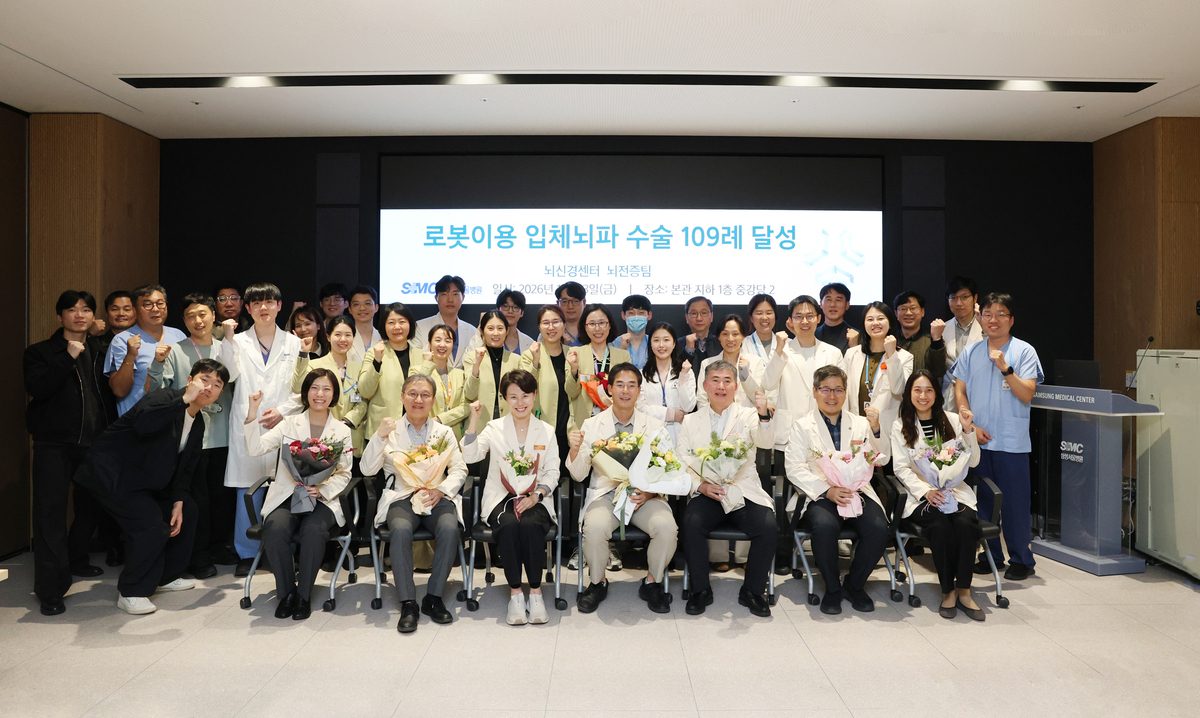
Ten to twenty hair-thin electrodes have to reach precise points deep inside a patient's brain before doctors can even locate where a seizure starts. At Samsung Medical Center in Seoul, that job increasingly belongs to a robot. The hospital announced on November 16, 2026, that its ROSA surgical robot has now been used in 109 procedures for intractable epilepsy, maintaining placement accuracy above 95% since its introduction in 2021.
The procedure, called stereoelectroencephalography, involves threading electrodes through small holes in the skull to map which part of the brain is triggering seizures that medication cannot control. Surgeons use that mapping to decide where to operate or, in some cases, confirm that surgery is not needed at all.
Faster, Fewer Complications
Samsung Medical Center says ROSA has cut electrode placement time to roughly one-third of what it took before the robot was introduced, while keeping the complication rate below 1%. Lee Seung-hoon, a neurosurgery professor at the hospital, credited the robot with reducing both operating time and the risk of complications such as brain hemorrhage, calling it a direct benefit to the burden placed on patients.
Supporting the robot is SESTA, an in-house digital twin system that simulates electrode trajectories before the actual operation begins. By modeling the placement virtually first, surgeons can catch risky paths, ones that might nick a blood vessel or miss the target region, before a single electrode touches the patient. Seo Dae-won, head of the hospital's neuroscience center, has overseen the program's expansion since its launch.
A Narrow but High-Stakes Use Case for Surgical Robots
Epilepsy electrode placement is a smaller surgical niche than the hip replacements or prostatectomies that dominate robotic surgery headlines, but it is exactly the kind of procedure where robotic precision has an outsized payoff. Human hands, however skilled, introduce small tremors and positioning drift over a long procedure; a robot holding steady across 10 to 20 separate electrode insertions removes that variable entirely.
The reported sub-1% complication rate stands out against historical rates for manual stereoelectroencephalography, where brain hemorrhage risk has been cited in medical literature at several percentage points depending on the center and patient population. If Samsung Medical Center's figures hold up across a larger patient pool, it strengthens the case for robot-assisted electrode placement becoming standard rather than a specialty offering limited to a handful of major hospitals.
The hospital has not disclosed plans to expand ROSA's caseload beyond epilepsy surgery, but the five years of data behind the 109-case milestone give Samsung Medical Center a track record other hospitals weighing similar robotic investment will likely scrutinize closely, according to Seoul Economic Daily.