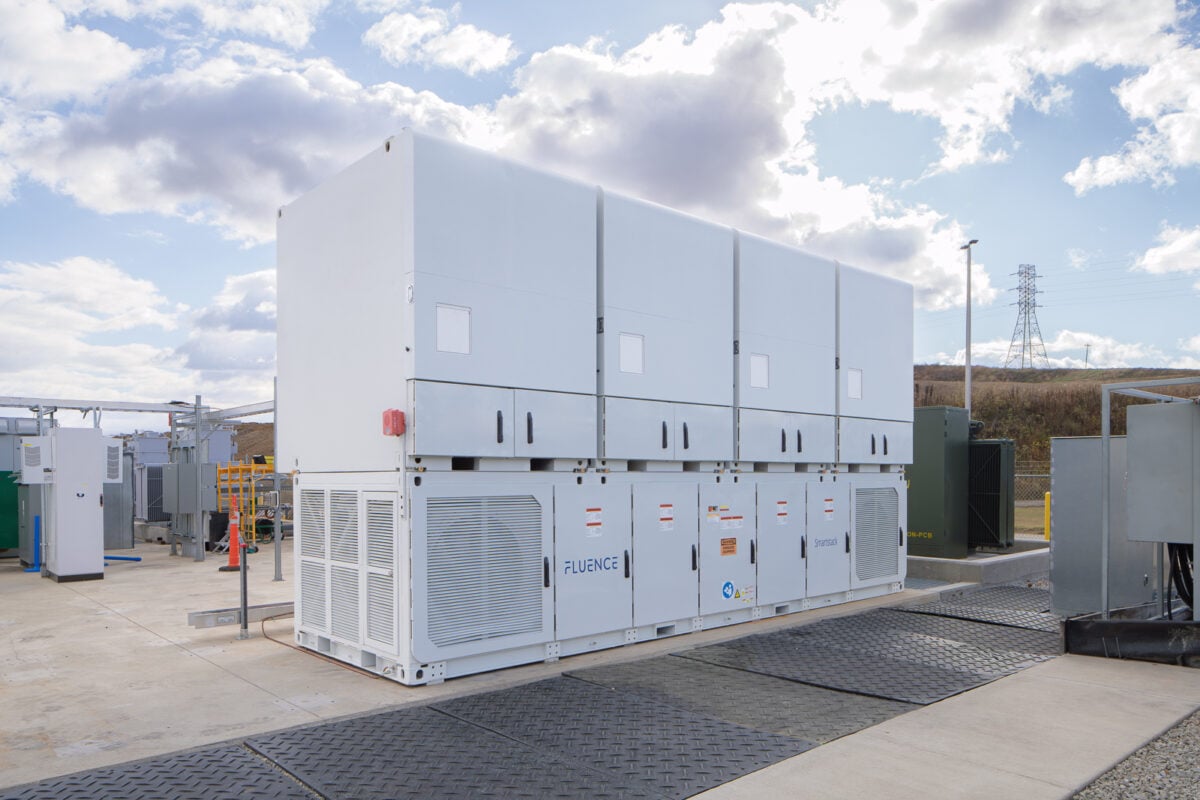
Independent assurance giant DNV has verified that Fluence Energy's global fleet of battery energy storage systems achieved 98.7% MW-weighted availability, setting a third-party benchmark for an industry where uptime claims rarely come with audited math.
What DNV checked
DNV reviewed Fluence's internal fleet-level data, the calculation methodologies baked into its commercial contracts, and operational data from selected projects. The audit confirmed 98.7% MW-weighted availability across the reviewed fleet and 99.3% across operating assets of 50 MW and larger.
Why the number matters
Across the storage industry, suppliers routinely advertise availability in the 95-98% range, but definitions diverge widely — planned outages, partial deratings and software issues are all treated differently. "Customers invest in energy storage to deliver power exactly when it is needed, and every minute of downtime represents lost revenue and grid vulnerability," said Fluence chief customer success officer John Zahurancik, framing the verification as a transparency exercise.
The data-center angle
Fluence booked $2B in orders in the first half of its fiscal year, double the prior year, and recently confirmed master supply agreements with two hyperscale data-centre customers. For those operators, the gap between 98.7% and a competitor's claimed 99.5% is not trivial — roughly 70 additional hours of downtime per year, potentially worth up to $1M per megawatt per day at AI-heavy sites.
Inside a frantic week for grid storage
The DNV validation lands as BESS deal flow accelerates: this week alone, Voltus acquired Brightfield AI, TWAICE locked an analytics contract on BayWa r.e.'s 282 MWh Alfeld site, and Aquila closed merchant debt for the 56 MW Project Wetzen BESS. As AI loads stretch the grid, independent uptime data is fast becoming as important as MWh.
Reporting based on coverage from Energy-Storage.News, Fluence and DNV.