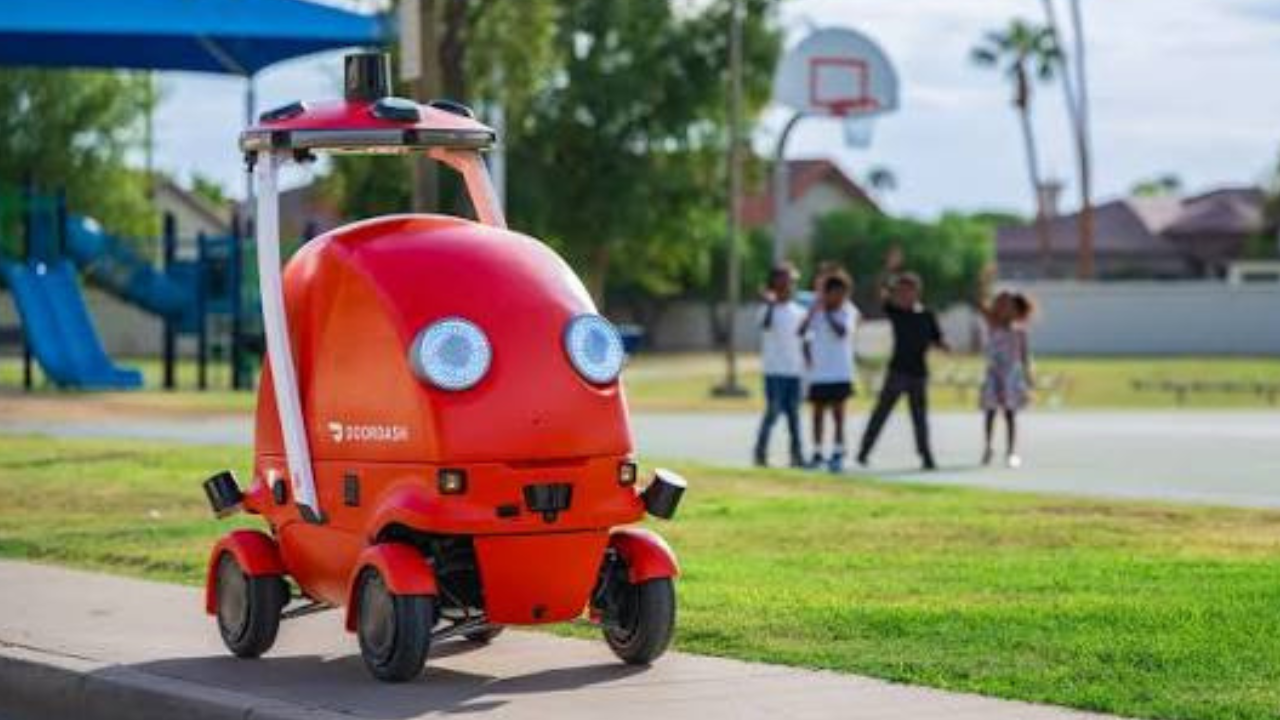
DoorDash has started piloting its autonomous delivery robot, Dot, in weather it has never faced before: snow, sleet and rain. Eight Dot units are now operating across downtown Salt Lake City and nearby neighborhoods including Central City, Central Ninth, Ballpark, Liberty Wells, East Central and the lower Avenues, the company confirmed this week. The robots are not yet carrying customer orders — the goal, for now, is purely to gather data on how Dot performs in winter conditions.
Dot has operated commercially in the Phoenix, Arizona area, where DoorDash says the robot's deliveries have already offset the equivalent of 11,252 gallons of gasoline that human drivers would otherwise have burned. Arizona's climate, however, rarely tests a robot's traction, sensors or battery performance in freezing or wet conditions — which is exactly what Salt Lake City offers.
How does Dot work?
Dot is a 350-pound, fully electric, wheeled delivery robot that tops out around 20 mph and can carry up to 30 pounds, or roughly six large pizza boxes, over trips of less than four miles. It is designed to travel primarily in bike lanes, though it can also use sidewalks, driveways and streets. Radar and camera sensors let it detect pedestrians crossing its path, small animals and approaching emergency vehicles, allowing it to stop or reroute without a human operator.
None of that changes in snow. What changes is traction, visibility for the robot's cameras, and how sensors interpret slush, puddles and reduced contrast between a road surface and a curb. DoorDash's VP of Autonomy, Ashu Rege, said the Salt Lake City pilot is meant to build "the safety case and operational knowledge needed to expand this technology responsibly" — language that signals this is a data-gathering exercise, not a near-term commercial launch in Utah.
Why does weather matter for the robot delivery business?
Sidewalk and bike-lane delivery robots have mostly proven themselves in temperate climates. Serve Robotics operates thousands of units across more than 150 U.S. cities, and Starship Technologies runs large campus and neighborhood fleets, but both companies have leaned toward warm, dry markets for their biggest deployments. Bad weather is precisely when human delivery drivers are least willing to work and customers most want delivery — which is also why DoorDash frames winter capability as a competitive opening rather than a liability.
DoorDash's government relations team has also moved to reassure human couriers: when an order is fulfilled by Dot instead of a dasher, any tip left by the customer is refunded, and the company says human dashers — more than 70,000 of them operate in Utah alone — remain central to its delivery network rather than being displaced by the robots.
What happens next?
DoorDash has not set a date for turning on customer deliveries in Salt Lake City, nor has it said which other cold-weather markets might follow once the pilot concludes. The company's framing suggests the data collected this winter will determine where and how fast Dot expands into markets with real seasons — a test the company has avoided running until now.