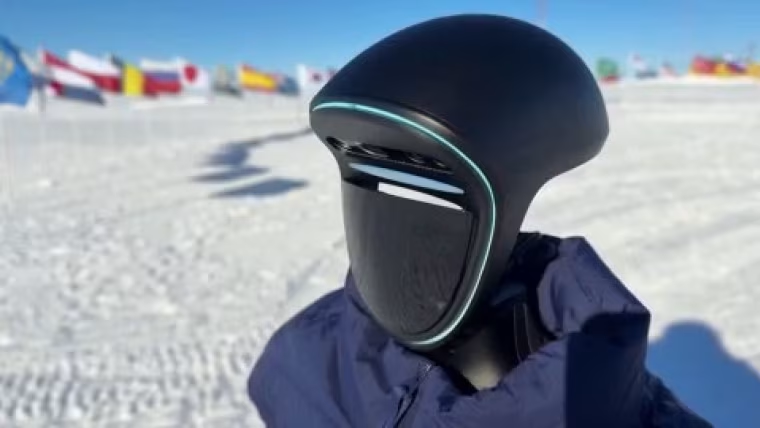
A humanoid robot named Qestr became the first machine of its kind to enter the Antarctic Ice Ultra on November 8, 2026, but its attempt ended after roughly 3 kilometers when its lithium-ion battery failed in air temperatures of -24°C. Qestr lined up alongside 25 human ultra-runners at Ultima Camp, deep in Antarctica's interior, before organizers pulled it from the course.
Race organizer Oliver Wang confirmed it was the first time a humanoid robot had entered the event, which is run by US-based Runbuk, the same company behind the North Pole Marathon. Qestr wore a custom thermal jacket built to protect its internal electronics and actuators from the cold, but the covering was not enough to keep its battery charged through the extreme conditions.
Why the Cold Won
Bipedal humanoid robots burn through power quickly because they must constantly recalculate balance and joint torque with every step on uneven terrain, unlike wheeled robots that glide at a steady energy draw. Lithium-ion cells also lose usable capacity as temperatures drop, since the chemical reactions that release stored energy slow down in the cold. Combined, those two factors meant Qestr's walk lasted only a few minutes before its power reserves were exhausted, well short of the ultra-marathon distances the human field was attempting.
The failure echoes a broader pattern already visible in humanoid robotics. Earlier in 2026, a humanoid robot won the Beijing E-Town Half-Marathon in a time of 2 hours 40 minutes, and another machine completed a separate Beijing half-marathon in 50 minutes 26 seconds, both performances achieved in temperate indoor-to-outdoor conditions rather than sub-freezing wilderness. Those results suggest current humanoid hardware can handle sustained distance on flat, climate-controlled or mild courses, but struggles once extreme cold enters the equation.
What It Means for the Industry
Antarctic and polar environments are a proving ground that robotics makers have mostly avoided, because few commercial use cases demand walking robots in sub-zero wilderness. But the same battery-chemistry and thermal-management problems that stopped Qestr also affect humanoid robots being pitched for outdoor construction, agriculture, disaster response and defense roles in cold climates. Any manufacturer targeting those markets will need either solid-state or other cold-tolerant battery chemistries, active battery heating, or hybrid power systems that keep internal temperatures within an operating range.
Qestr's manufacturer has not been publicly disclosed in race coverage. Runbuk has not said whether a humanoid entrant will be invited back to a future Antarctic Ice Ultra, but the attempt adds a new data point to an industry still mostly testing humanoids on factory floors and sidewalks rather than in the field.