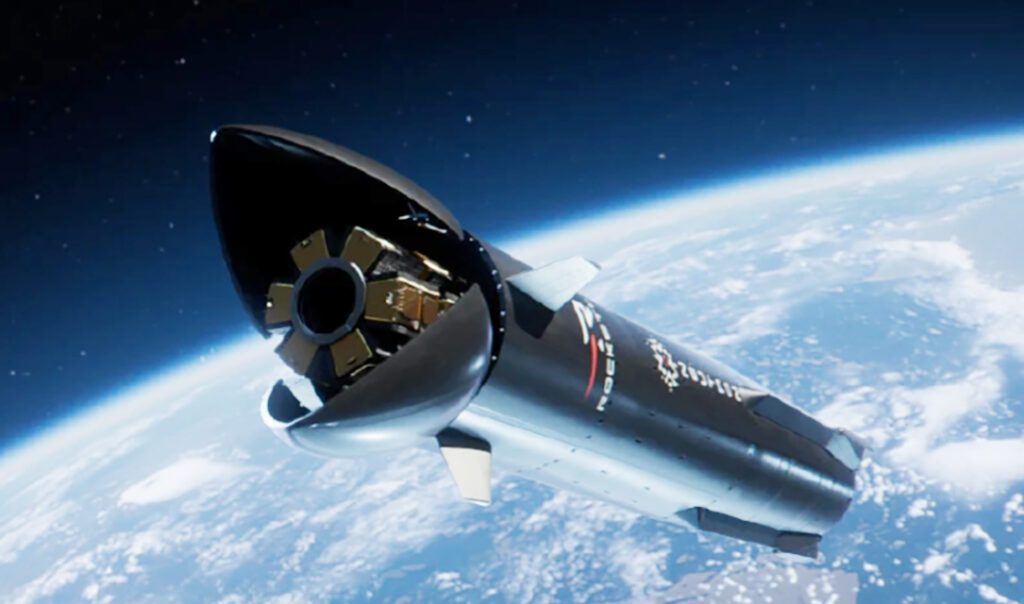
Rocket Lab has secured a conditional loan commitment of up to $150 million from the Pentagon's Office of Strategic Capital (OSC) to speed up manufacturing of its new Neutron rocket. The deal, announced November 9, 2026, is debt financing rather than an equity raise, so it doesn't change Rocket Lab's public-market valuation; the company already trades on Nasdaq under the ticker RKLB. The money is earmarked for scaling up production of engines and carbon-composite rocket structures, buying additional maritime recovery vessels, and upgrading infrastructure to turn rockets around faster between launches, according to the SatNews.
What is Neutron, and why does it need a loan?
Neutron is Rocket Lab's new medium-lift rocket, designed to carry up to 13,000 kilograms to low Earth orbit using seven methane-fueled engines and a reusable carbon-composite first stage meant to land and fly again, a concept similar to SpaceX's Falcon 9. The rocket hasn't flown yet; Rocket Lab now expects its debut launch in 2027 after a manufacturing issue earlier this fall left small voids in a composite propellant tank, which the company says it has since fixed through process refinements.
Even before its first flight, Neutron has booked more than $515 million in launch contracts from satellite constellation operators during the third quarter of 2026 alone, pushing Rocket Lab's total backlog across all its rockets to $3.57 billion and 117 scheduled launches. The company's broader business is already growing fast too, posting a record $268 million in quarterly revenue in Q3 2026. The loan is meant to make sure the factory and recovery fleet can keep pace with that demand once flights actually begin.
Why is the Pentagon lending money to a rocket company?
The Office of Strategic Capital isn't a venture fund; it's a Department of War program that makes loans to companies building technology the Pentagon considers critical to national security, charging market-based rates rather than handing out grants. For Neutron, the stated goal is making sure the U.S. military has a second reliable domestic launch provider beyond SpaceX for both commercial and defense payloads. OSC senior vice president Peter Anderson said the commitment "would enable Rocket Lab to create more launch opportunities" and strengthen U.S. launch capacity, while Under Secretary of War Emil Michael tied it to building "the resilient, capable domestic launch network required to safeguard our national security interests."
Like all OSC commitments, this one is conditional. Rocket Lab still has to satisfy financial, legal, technical and investment due diligence before the loan closes.
How does this fit into the launch market, and what's next?
Rocket Lab already competes with SpaceX, Blue Origin and newer entrants like Stoke Space, which separately received its own $150 million OSC loan in recent weeks, part of what counts as the Pentagon's third major space-industrial loan commitment within three weeks. That pattern suggests Washington is trying to seed several competing domestic launch suppliers at once rather than betting on one.
What to watch next: whether Rocket Lab clears the remaining conditions to close the loan, how the fixed propellant-tank issue holds up through further testing, and whether Neutron's first launch stays on track for 2027 given the rocket's already-growing contract backlog.