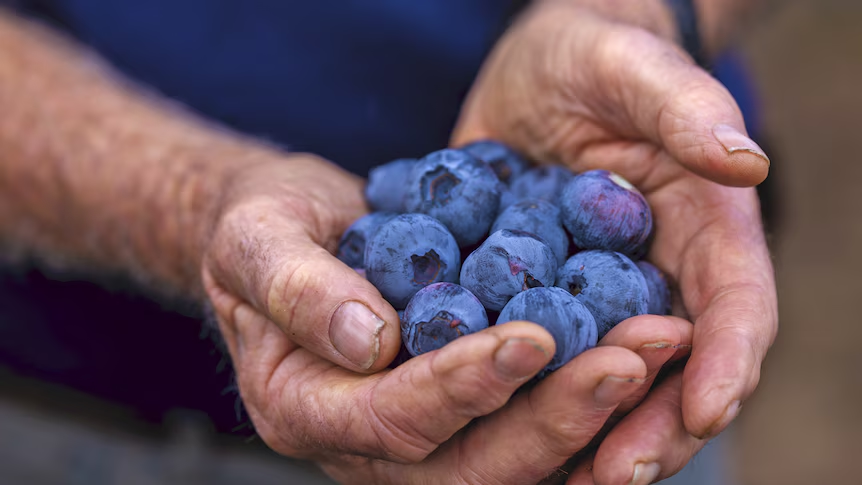
On a 120-hectare property 100 kilometers north of Perth, a tractor rolls down a row of blueberry bushes with no one in the cab. Western Berry, Western Australia's largest blueberry grower, has started running driverless, self-navigating tractors for foliar spraying alongside laser-guided weed control systems and autonomous haulers that move picked fruit from field to pack house.
The family-run farm, founded roughly 30 years ago by Derek and Barbara Fisher and now managed by their three sons, produces just under 1,500 tonnes of blueberries a year and plans to triple that output. Machine harvesting already processes about six tonnes of fruit daily at roughly AU$0.50 per kilogram, compared with around AU$6 per kilogram for hand picking, according to figures reported by the ABC.
Why berries are the hard case for farm robotics
Leafy greens, grains and row crops have been mechanized for years, but soft fruit has resisted automation because a bruised berry is unsellable. Western Berry splits the problem in two: driverless tractors and haulers take over tasks that don't require delicate handling, while battery-operated, solar-powered harvesters that are currently remote-controlled are being pushed toward full autonomy for the actual picking.
That staggered rollout mirrors where agricultural robotics stands industry-wide. Weeding and spraying automation have scaled commercially across row-crop operations, while delicate harvesting still lags because soft fruit demands a gentler touch than most grippers can reliably deliver. Western Berry's own numbers suggest the economics are already there for non-picking tasks, with machine operations running at roughly a twelfth of the cost of manual labor for the jobs robots currently handle.
The farm also uses photographic packing and grading systems and autonomous punnetising machines downstream of the field, and is adding laser-guided "green on brown" systems that distinguish weeds from crop by color rather than shape. Even with full automation of spraying, weeding and hauling, the company expects machine harvesting to cover at most half of total crop volume, with hand picking remaining necessary for the most delicate fruit.
Labor shortages are the real driver, not cost alone
Western Berry currently employs more than 200 people for picking operations, and Australian growers have flagged federal visa processing delays and working holiday maker restrictions as a persistent threat to seasonal labor supply. Rather than cutting headcount, the Fisher family frames automation as a way to keep expanding without being capped by how many pickers it can find each season — one of its managers noted that employment numbers are still growing faster than technology can replace the work.
The farm's next phase looks beyond harvesting and hauling toward humanoid robots for AI-guided pruning, autonomous mowing, and camera-based crop health detection, suggesting the current fleet of driverless tractors and haulers is an early layer rather than an endpoint. For an industry where labor costs and availability have become the binding constraint on expansion, Western Berry's bet is that robotics scales production without scaling the hiring problem alongside it.