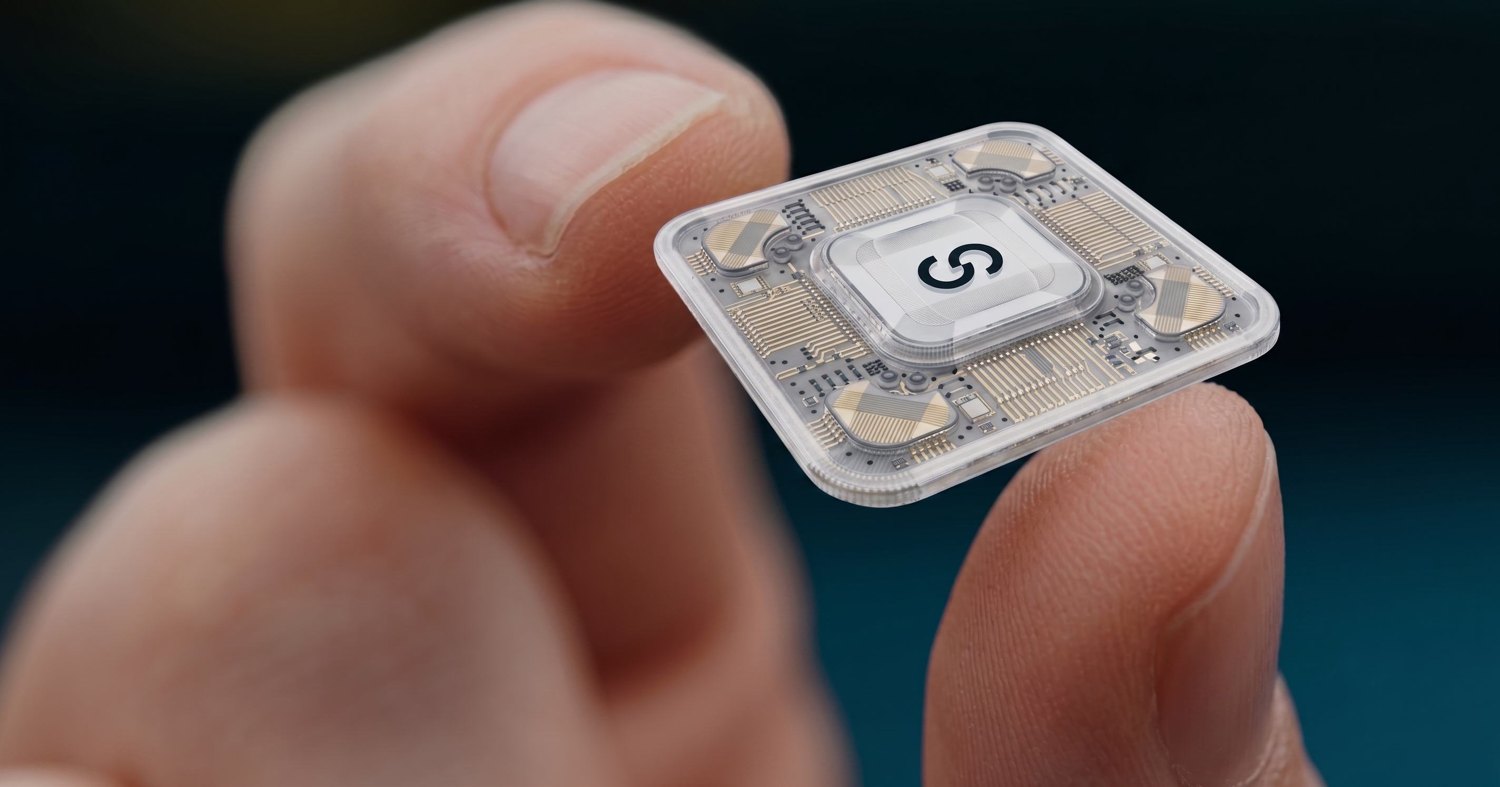
Leipzig-based SAXON Q on July 21, 2026 opened commercial ordering for the SXQ128 and SXQ512, the first diamond nitrogen-vacancy quantum computers to exceed 10 qubits and, according to the company, the first commercial NV-center systems that coordinate computation across multiple quantum processing cores at room temperature.
128 And 512 Qubits, No Cryogenics
The SXQ128 delivers 128 qubits across 16 cores of eight fully entangled qubits, while the flagship SXQ512 delivers 512 qubits across 32 cores of 16 qubits each. Both fit inside a standard 19-inch server rack, plug into an ordinary electrical outlet and run continuously without the recalibration cycles, vacuum equipment or cryogenic infrastructure typically required by superconducting or trapped-ion architectures. The SXQ128 is available with delivery within roughly three months of order placement, while the SXQ512 begins shipping in Q2 2027.

Semiconductor-Compatible Fab, 220+ Patents
SAXON Q was founded in 2021 by Leipzig University physicists Marius Grundmann and Jan Meijer with Bernd Burchard, and now employs about 20 physicists and computer scientists in Saxony. The company built its stack on semiconductor-compatible manufacturing, uses off-the-shelf microwave and laser components rather than exotic cryo hardware, and protects more than 220 patents and pending applications on NV-center fabrication and quantum-processor assembly.
Room-Temperature Race Heats Up
SAXON Q launch lands in an increasingly crowded race to make quantum computers rack-ready. Just days earlier, Shanghai Zhongqi Wuliang unveiled a server-form-factor neutral-atom system at WAIC 2026, and PsiQuantum extended its DARPA Quantum Benchmarking contract to $125 million to validate its photonic utility-scale hardware. SAXON Q is targeting materials research, chemistry simulation and quantum machine-learning applications where room-temperature access could pull quantum out of specialized labs and into standard data centers.
Reporting based on coverage from The Quantum Insider, HPCwire, Quantum Computing Report and SAXON Q.