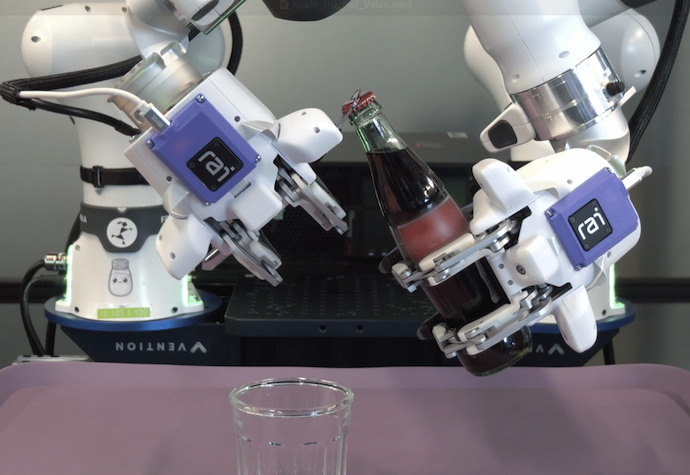
Japan's SoftBank Group has agreed to acquire the Robotics and AI Institute (RAI), the Cambridge, Massachusetts research organisation founded by Boston Dynamics veteran Marc Raibert, in a move that adds one of the deepest physical-AI research benches in the industry to SoftBank's expanding robotics stack.
A research house built to bridge humanoids and physical foundation models
RAI Institute was established in 2022 with more than $400 million in seed funding from Hyundai Motor Group, which also controls Boston Dynamics. Raibert set up the institute as a not-for-profit-style research house that would work alongside — but not inside — Boston Dynamics, with an explicit brief to attack the hardest problems in dexterous manipulation, learning-based control and physical foundation models. Under Raibert's leadership the team has published widely on Spot, unveiled the multi-finger juggling platform AthenaZero and an Ultra Mobility Vehicle for parkour-style locomotion, and set up joint appointments with ETH Zurich under Marco Hutter.
Why SoftBank is buying
The deal, terms of which have not been disclosed, marks the second major robotics acquisition SoftBank has agreed to in twelve months, after its $5.4 billion take-out of ABB Robotics announced in late 2025. RAI slots on top of stakes SoftBank has already accumulated in Boston Dynamics, AutoStore and a growing list of humanoid names, giving Masayoshi Son's group control of both a mass-production robotics arm and a research engine designed to feed it with new capabilities.

CFIUS review is the swing factor
Because SoftBank is a Japanese buyer and RAI is a US-based research organisation with contracts spanning US universities and Boston Dynamics, the transaction will pass through a Committee on Foreign Investment in the United States (CFIUS) review. That review is expected to focus on RAI's data holdings, publication rights and its links to Boston Dynamics-derived hardware. Analysts covering the physical-AI stack expect the deal to clear, given SoftBank's existing US regulatory footprint, but any behavioural remedies could reshape how the institute publishes and shares data.
What it changes for physical AI
If the transaction closes, RAI's next-generation manipulation and locomotion research will sit under the same shareholder as ABB Robotics' industrial arms, Boston Dynamics' humanoid and quadruped hardware, and SoftBank's chip and cloud portfolio. Raibert is expected to remain executive director. For rivals in humanoids and general-purpose robotics, the takeaway is that a single strategic — not a big-tech incumbent — is now assembling the world's most vertically integrated physical-AI holding.
Reporting based on coverage from The Robot Report, IEEE Spectrum and RAI Institute.