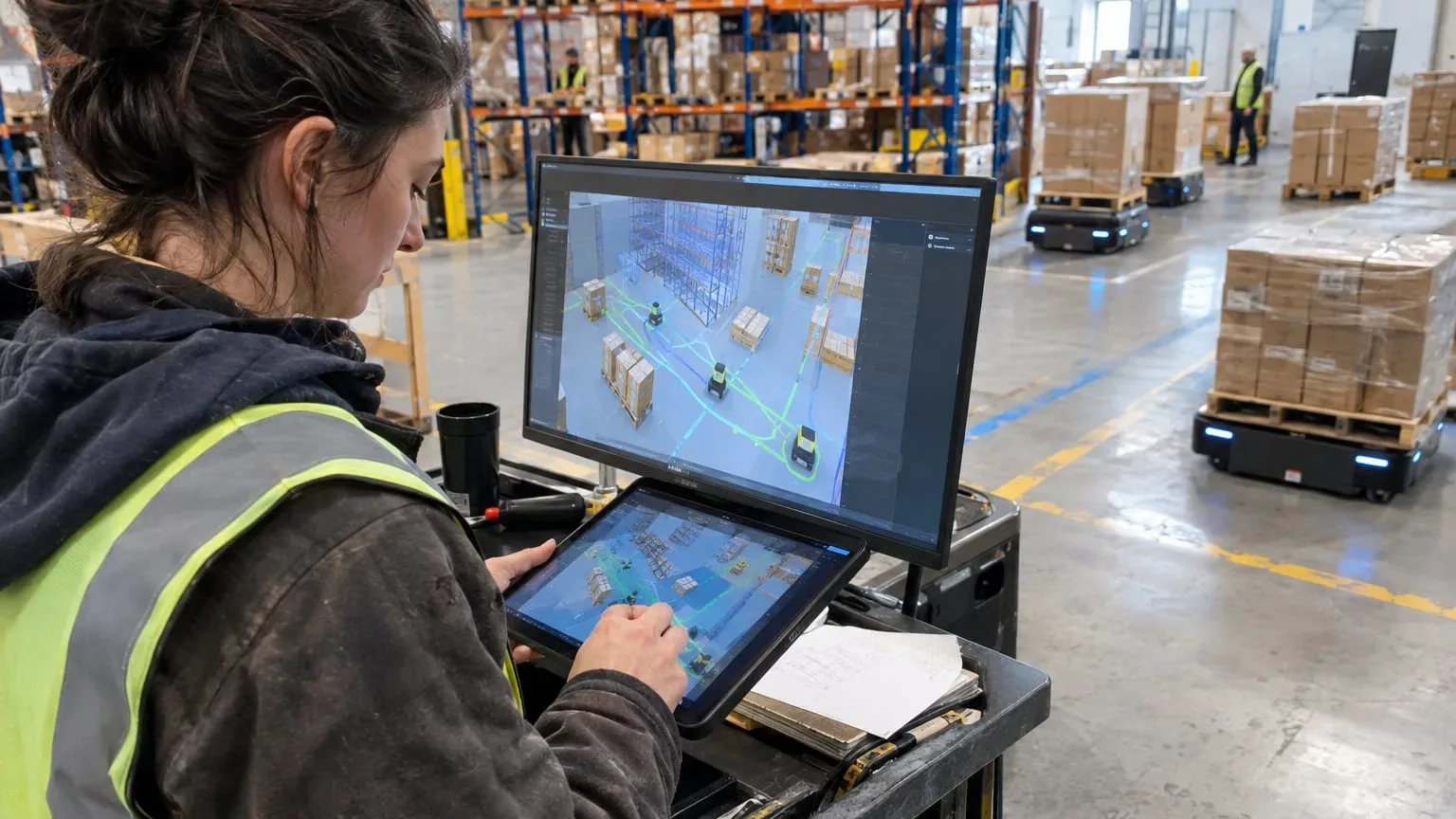
Certifying a warehouse robot for a new facility has traditionally meant waiting for the machine to physically arrive before inspectors can check routes, clearances and failure scenarios. TÜV SÜD and Accenture say that wait is no longer necessary, unveiling a concept called the Physical AI Safety Suite that runs those checks in simulation first, according to a report from MarketScale.
The suite is built on Nvidia's Omniverse libraries, its Cosmos world model platform, the Isaac Sim robotics framework, the Halos safety platform and the IGX Thor edge AI platform. TÜV SÜD CEO Patrick Vollmer said the approach lets certification teams "enter the physical inspection phase much better prepared," by front-loading evidence gathering before a single robot is installed.
Three layers of simulated inspection
The system operates across three distinct layers. At the facility level, it assesses routes, clearances and mixed-use zones where people and machines share space. At the fleet level, it models operational hazards, such as a worker becoming trapped by a robot's path, before that scenario can occur on a real floor. At the individual machine level, it tests sensor placement and load and speed scenarios against the specific robot model being deployed.
Each layer produces an evidence package covering operating-zone requirements, hazard reduction measures and robot integration norms — documentation that previously required a physical facility and installed hardware to compile. Accenture's Sarat Maitin argued that safety assessment should happen during planning rather than being "left until the end," reversing the usual sequence where certification is the last gate before a robot fleet goes live.
Why the timing matters for warehouse automation
TÜV SÜD and Accenture are pitching the 30% time savings specifically against traditional certification workflows that require physical inspection before sign-off, and the initial focus is autonomous mobile robots in warehouses and logistics, with manufacturing facilities as a secondary target. Maitin said the companies expect first large-scale deployments within 12 months, starting in warehouses.
The push comes as warehouse robot orders have been climbing through 2026 and operators face growing pressure to compress the time between signing a robotics contract and getting fleets running. A certification process that can start before hardware ships would remove one of the slower steps in that chain, particularly for large multi-site rollouts where safety sign-off has to be repeated at each location. Neither company named a launch customer, and pricing for the Physical AI Safety Suite has not been disclosed, but the partnership signals that established certification bodies are now treating simulation-based assessment as a credible substitute for parts of physical inspection, not just a planning aid alongside it.