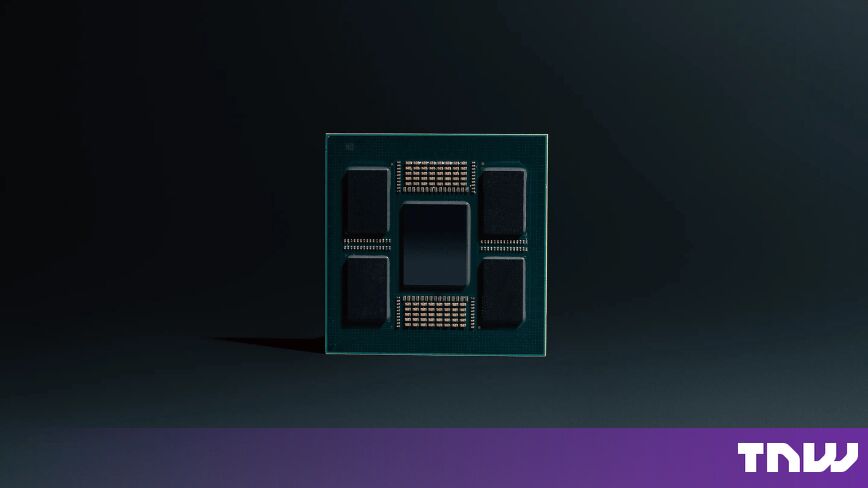
Alphabet's Waymo has published a rare look inside its self-driving stack, disclosing the architecture of the onboard computer that powers its Ojai robotaxi, a custom 5-nanometer application-specific integrated circuit (ASIC) it designed in-house, and the seven hardware partners that build the platform alongside it.
What the ASIC actually does
Waymo's custom silicon is a front end. Built on a 5nm process node, the ASIC ingests raw data from the robotaxi's 13 cameras, four lidars and radar array, performs temporal denoising to sharpen perception in low light, and hands cleaned sensor streams to a separate inference engine that runs the driving models. The company says the ASICs alone deliver more than 1,000 TOPS of machine learning performance dedicated to that front-end job, though it stops short of the whole-vehicle compute comparisons that some coverage drew against Nvidia's automotive platforms.
Suppliers: Nvidia and AMD are still on the list
Waymo names seven hardware partners in its architecture disclosure: TSMC, Nvidia, AMD, Micron, Samsung, Sandisk and Socionext. TSMC fabricates the ASIC, Micron, Samsung and Sandisk provide memory and storage, and the Japanese fabless designer Socionext helps Waymo build custom silicon without spinning up its own chip division. Nvidia and AMD supply CPUs and GPUs for what Waymo describes as a "balanced, heterogeneous system" that pairs proprietary ML silicon with best-in-class merchant compute.

Two engines, dual redundancy and Zeekr-built hardware
The compute platform is engineered around three constraints Waymo labels responsive, ruggedised and redundant. Raw pixels-to-actuation latency has been cut by a 20-fold jump in compute over eight years. The system rides in a vehicle, not a rack, so it plumbs into the car's liquid cooling loop and rides temperature swings from Midwest winters to Phoenix summers. And the whole platform runs as two independent engines: normal operation stitches them into a single parallel unit, but if one fails the other takes over with no human backup.
The Ojai robotaxi itself is a purpose-built four-seater manufactured by Zeekr, a premium electric vehicle brand owned by Chinese automaker Geely. A day before publishing the chip post, Waymo opened the Ojai to all riders in Los Angeles, Phoenix and San Francisco after months of invitation-only rides. Bloomberg reports that the new ASIC is now being fitted into Ojai vehicles, though Waymo has not disclosed how many units carry the custom silicon.
Scale and politics
Waymo cites more than 200 million autonomous miles behind the chip design, roughly 4,000 vehicles across more than 10 US metros and around 500,000 paid trips a week. The company has said it will present more silicon detail at Hot Chips this month, and describes the ASIC as "just one of several exciting custom components" it is developing.
The disclosure lands as Washington tightens rules on Chinese hardware in American self-driving vehicles. Waymo designing the brain in California while a Geely-owned Chinese automaker supplies the body is one response, though the company has not framed the split that way. Alphabet's push into custom silicon is a wider pattern: it now sits alongside a fresh $200 billion Samsung-Broadcom MOU for hyperscaler AI silicon, and Marvell's recent $12.2 billion warrant deal for custom Google chips.
Reporting based on coverage from The Next Web, Bloomberg, The Verge and Waymo's official architecture disclosure.