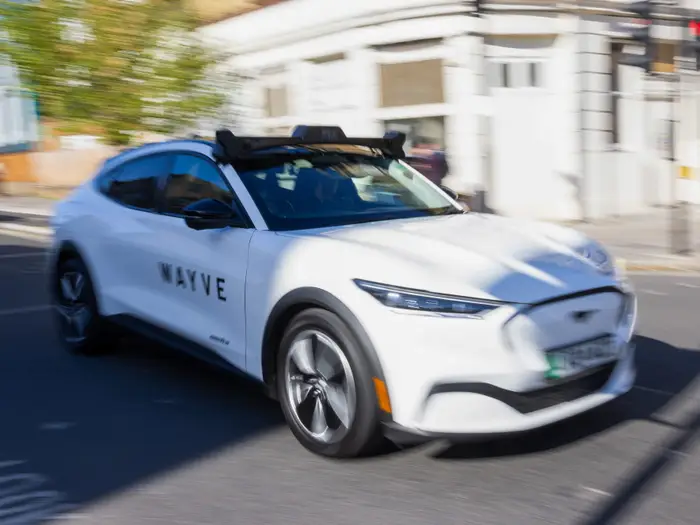
British autonomous-driving company Wayve has launched Wayve Labs, a new research unit dedicated to advancing embodied artificial intelligence beyond the car. The lab, led by chief scientist Jamie Shotton, formalises an effort that has been quietly growing since the company closed a $1.5 billion Series D last year backed by SoftBank, NVIDIA and Microsoft.

Embodied AI as the next frontier
Wayve Labs is structured around the thesis that the same end-to-end learning approach that powers Wayve''s production self-driving stack can generalise to other agents that need to act in the physical world. Research areas include world models, reinforcement learning, representation learning, spatial intelligence and large-scale policy training. The team already includes dozens of researchers and engineers and is hiring senior AI talent across London, Mountain View and Vancouver.
Connecting cars and robots
The lab is not chartered to ship a product on day one. Instead, Wayve says it will publish open research while feeding insights back into its Wayve AI Driver platform, which is being deployed with multiple global automakers and runs on NVIDIA DRIVE AGX Thor. That dual mandate puts Wayve in direct conversation with humanoid players such as Apptronik and physical-AI labs that emerged from the foundation-model wave.
Why this matters
Wayve''s expansion mirrors a broader industry shift toward general-purpose embodied AI. Companies including Autobrains, Tesla and Waymo are converging on world-model architectures that learn from real-world driving data, while robotics specialists chase similar primitives for manipulation. By splitting research from product, Wayve hopes to attract academic talent and accelerate breakthroughs without disrupting its commercial cadence.
Outlook
For Wayve, the stakes are high. A successful research arm could position the company as the European answer to OpenAI for the physical world – and a credible alternative to in-house labs at Tesla and Waymo. Investors will be watching whether Wayve Labs converts its embodied-AI research into licensing deals across robotics, eVTOLs and industrial automation in the next 12 to 18 months.
Reporting based on coverage from Wayve, TechCrunch and Tech.eu.