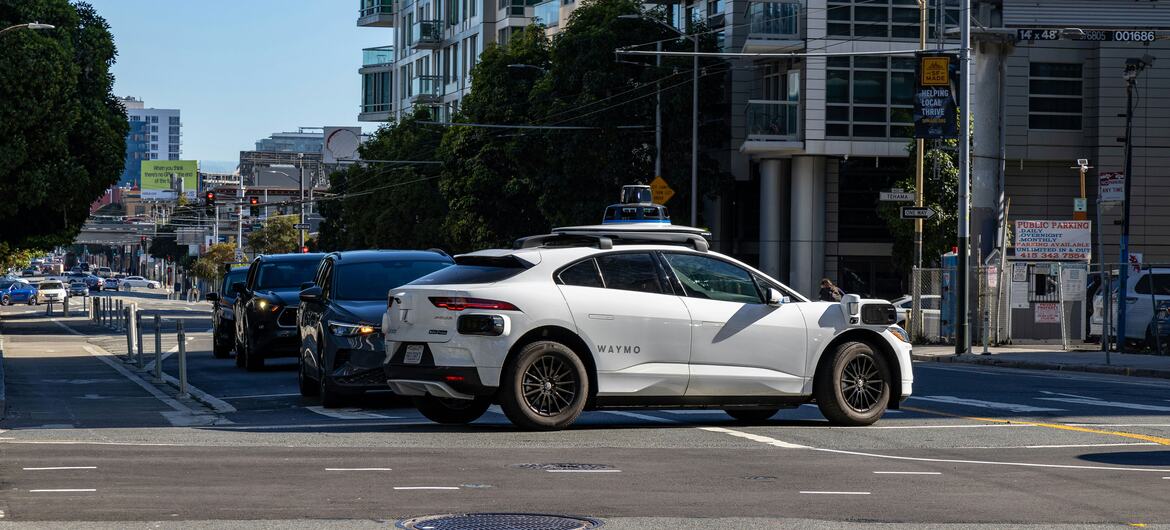
The United Nations has approved the first-ever global rules for fully self-driving vehicles, a landmark step that clears a major regulatory hurdle for the worldwide rollout of autonomous cars, trucks and robotaxis. The framework was adopted on 24 June 2026 by the World Forum for Harmonization of Vehicle Regulations, convened under the UN Economic Commission for Europe (UNECE).
One standard, many markets
The new regulation establishes common safety requirements and a shared method for validating vehicles equipped with automated driving systems (ADS). Crucially, it has backing from the world's largest automotive markets, including Canada, China, the European Union, Japan, the United Kingdom and the United States. By preventing fragmented national approaches, UNECE said the rules offer "clarity for manufacturers, confidence for consumers and a pathway to scale innovation safely across markets." The regulation is expected to enter into force in roughly one month.
Safety must match or beat a human
At the heart of the framework is a simple benchmark: an automated system must drive at least as well as a competent human. Because an ADS handles every part of driving, including steering, accelerating, decelerating and signalling, manufacturers must demonstrate robust design and compliance with traffic rules through simulation, closed-track testing and real-world trials. Companies are also required to operate audited safety management systems across the full life cycle of a vehicle, conduct continuous performance monitoring after deployment, and fit a data storage system so that safety-relevant events can be reviewed by regulators.

A decade after the hype
The agreement arrives a decade after early predictions of ubiquitous self-driving cars failed to materialise. Today the picture is more grounded, with Level 4 fleets expanding in defined urban zones. The clarity offered by a single global rulebook could accelerate the next phase. Operators such as Zoox, which recently unveiled its purpose-built robotaxi, and players advancing driver-assistance approval country by country, including Tesla's FSD push across the EU, stand to benefit from harmonised validation criteria. Freight is moving too, as shown by Volvo's autonomous trucking roadmap.
Updating the rulebook
Alongside the new framework, the UN forum adopted amendments to roughly 90 existing regulations to ensure they remain applicable to vehicles with ADS, including those built without traditional driver controls such as steering wheels or pedals. UNECE said the approach will "ensure continuity of the regulatory framework while enabling innovative vehicle designs, including fully driverless configurations."
Reporting based on coverage from UN News, UNECE and TechXplore.