MicroVision (NASDAQ: MVIS) has delivered its MOVIA S digital lidar sensors to what it calls "a leading artificial intelligence company and hyperscaler" for evaluation across robotics, autonomous systems and advanced AI applications. The Redmond, Washington shipment, announced on June 29, is the latest sign that lidar demand from AI-native robotics is starting to eclipse the automotive market that originally seeded the industry.
Hyperscaler in the mix, name withheld
MicroVision would not identify its customer, describing it only as "a global leader in artificial intelligence and large-scale computing infrastructure, with significant investments in robotics, intelligent automation, machine perception and AI-powered systems." Both the delivered units and additional backlog will be used to test perception, object detection and spatial-intelligence workloads for AI systems that need to act reliably in the physical world.
Perception is the bridge to Physical AI
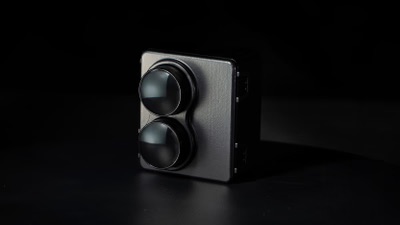
"AI systems can only be as effective as their understanding of the world around them," MicroVision CEO Glen DeVos said. "Whether the application is robotics, industrial automation, intelligent infrastructure, or autonomous mobility, perception serves as the bridge between intelligence and action." MOVIA S is a compact 180-degree solid-state lidar that MicroVision positions between its short-range MOVIA L and long-range IRIS and HALO sensors, aimed at cost-sensitive integrations where a hyperscaler-scale rollout matters as much as raw performance.
Riding the Physical AI wave
The shipment lands as investors bid up Physical AI perception plays. Ouster priced a $200M raise on July 2 and Aeva Technologies is up more than 100% year-to-date, with peers pointing to a market where robotics lidar shipments now exceed automotive advanced-driver-assist volumes. For MicroVision — whose rivals are already embedding sensors into physical-AI foundation models — the hyperscaler evaluation is a chance to convert engineering samples into a repeatable design win.
Reporting based on coverage from MicroVision investor relations, ACCESS Newswire and Investing.com.