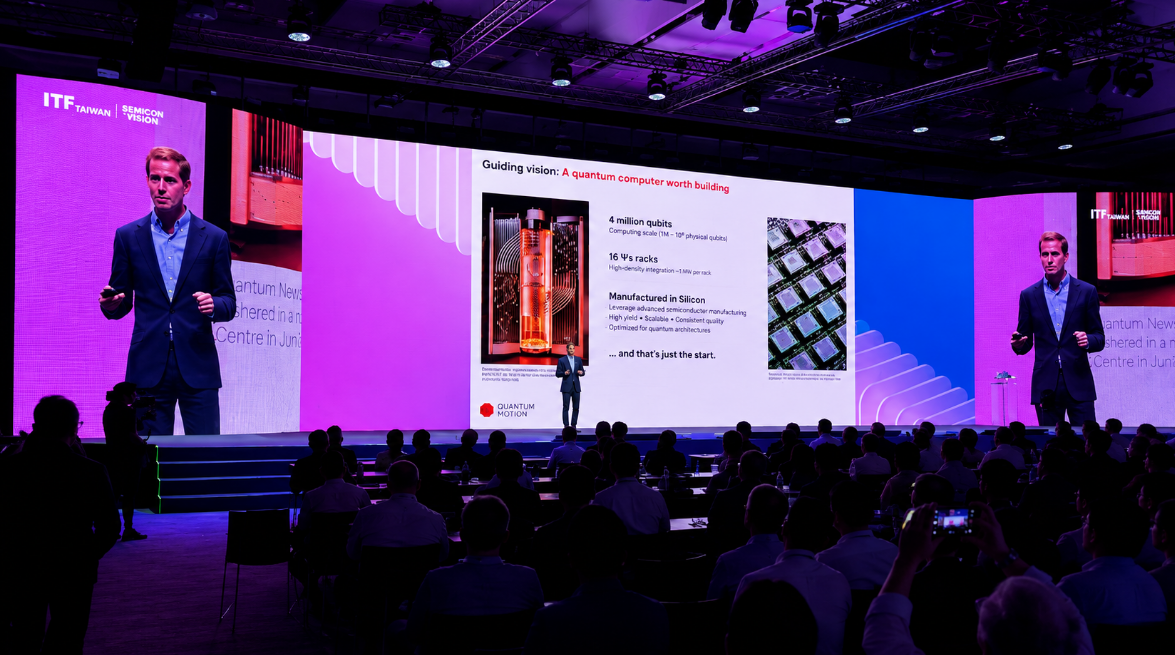
UK silicon spin qubit specialist Quantum Motion has closed a second tranche of its DCVC- and Kembara-led Series C, adding a heavyweight bench of strategic and financial investors as it opens a new US lab and pushes into DARPA's Quantum Benchmarking Initiative Stage B. The company disclosed the extension on September 3, 2026.
Who joined the round
New investors in the second close include Imec.ventures, Lansdowne Partners, Sony Innovation Fund, S3 Ventures and Inkef. Existing backers such as Bosch Ventures, Porsche Automobil Holding SE, Oxford Science Enterprises, British Business Bank, Firgun and Parkwalk Advisors participated in the original $160M Series C first close in May.
What the money is for
CEO James Palles-Dimmock said the money will fund custom silicon co-development, deepen the company's semiconductor supply-chain partnerships and support international expansion, including a new US lab in Maryland. Quantum Motion argues its 300mm silicon CMOS approach can cut per-machine cost from more than $100 million to single-digit millions, in the space of a standard data-center rack.

Silicon spin momentum
The Series C extension lands in a very busy week for silicon qubits, alongside Quobly's Dutch deals with TNO and OrangeQS, IBM's HRL Laboratories acquisition and the Quantinuum-Aramco industrial MoU and SEEQC-Taiwan cryo-CMOS MoU. Sony Innovation Fund said it was doubling down after Quantum Motion's National Quantum Computing Centre deployment.
The bet on CMOS
DCVC operating partner Prineha Narang framed the round as an infrastructure bet: "Quantum is critical infrastructure for the next century of computing, AI, and security, and leadership will go to whoever can industrialise it." Kembara's Yann de Vries said the second close reinforces its conviction that silicon transistor-based qubits are the path to scale.
Reporting based on coverage from The Quantum Insider and Quantum Motion.