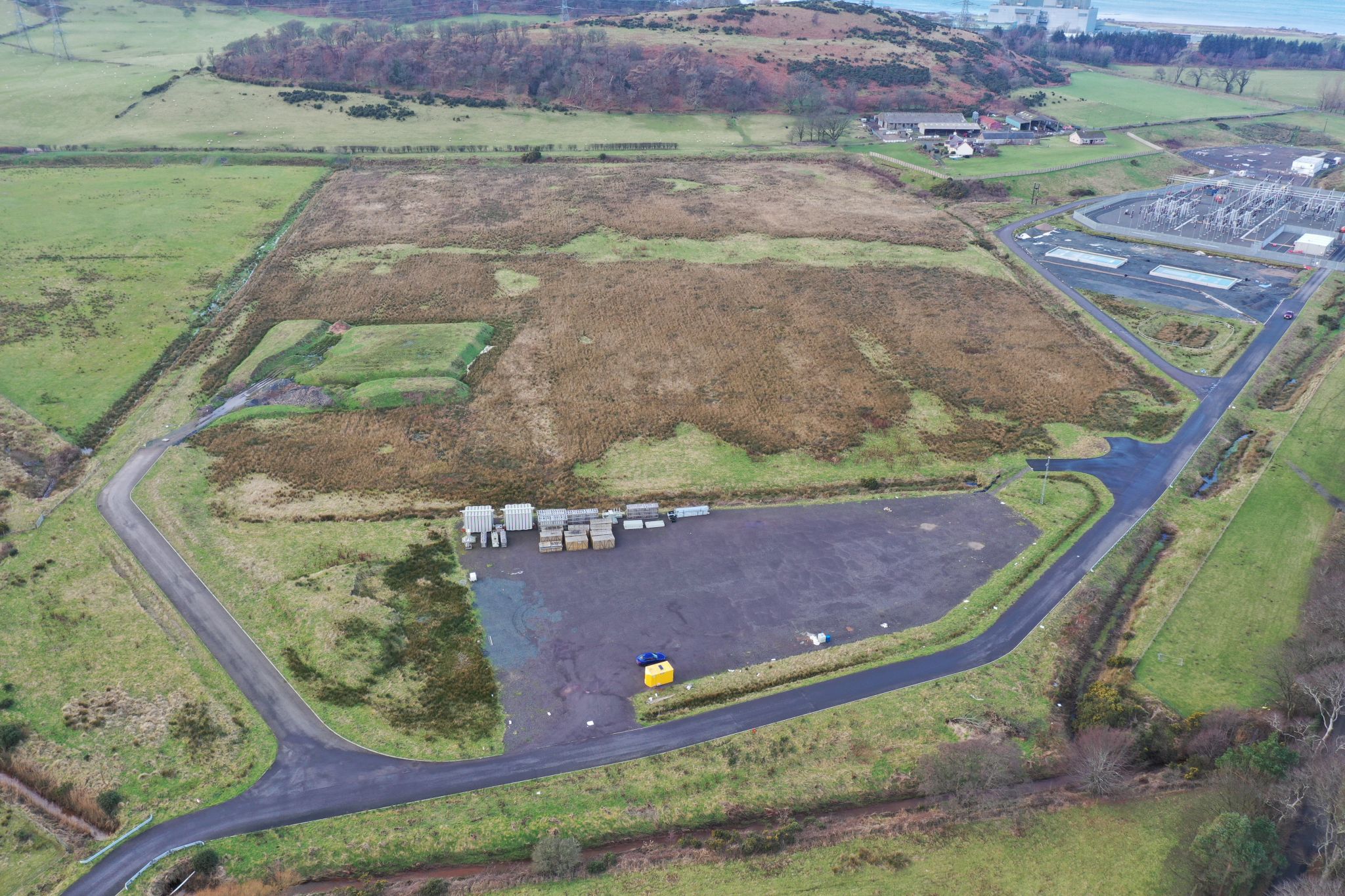
Carlyle-backed independent developer Revera Energy said Tuesday it has closed debt financing for its Hunterston BESS in Scotland — a 400 MW / 800 MWh two-hour lithium-ion battery that is the largest single asset in the group’s 2 GWh UK build-out and one of the biggest storage projects to reach financial close in the country this year.
800 MWh On Scotland’s Retired Nuclear Coast
The Hunterston site sits on the North Ayrshire coast, on land beside the decommissioning Hunterston B nuclear power station. Revera took final investment decision on the project in June 2026 and has moved directly into construction, with the plant expected to synchronise to the transmission network before the end of 2027. Once online, Hunterston will provide flexible balancing capacity to National Grid ESO in a region where wind-curtailment payments have surged past £1 billion a year.
The lender group and pricing on the new senior facility were not disclosed. Revera has previously tapped a US$150 million Standard Chartered-arranged sustainability-linked platform loan and a February 2026 project-finance package for its 400 MWh Windyhill asset outside Glasgow, part of the £500 million programme the company has committed to Scotland.
Anchor Of A 2 GWh Portfolio
Hunterston joins two other Scottish projects in the Revera pipeline: the operational 200 MW / 400 MWh Windyhill BESS and a 400 MW / 800 MWh scheme at Kincardine in Fife, expected to reach FID before the end of the year. Together the three assets deliver 1 GW / 2 GWh, roughly a fifth of the utility-scale BESS pipeline slated to commission in Great Britain in 2027.

Revera Energy launched in mid-2024 as an independent portfolio company backed by The Carlyle Group’s Global Infrastructure fund. The platform’s CEO John Wagstaff has publicly committed to scale the Scottish assets alongside a parallel Australian pipeline that also draws on Carlyle capital.
Storage Buildout Outpacing The Grid
The Hunterston close lands as the UK’s BESS pipeline continues to run ahead of transmission-network upgrades. Analysts at Modo Energy expect installed capacity to breach 8 GW by year-end — more than double the 2024 total — and to reach 16 GW by 2028 as revenue stacks continue to shift from frequency response toward wholesale trading and Balancing Mechanism dispatch.
The build-out is a rare bright spot in a market where integrator revenue outlooks are being cut and Chinese cell suppliers such as EVE Energy and CATL scoop up multi-gigawatt supply frameworks from Western developers.
Reporting based on coverage from Energy-Storage.news, Solar Power Portal and Energy Storage News.