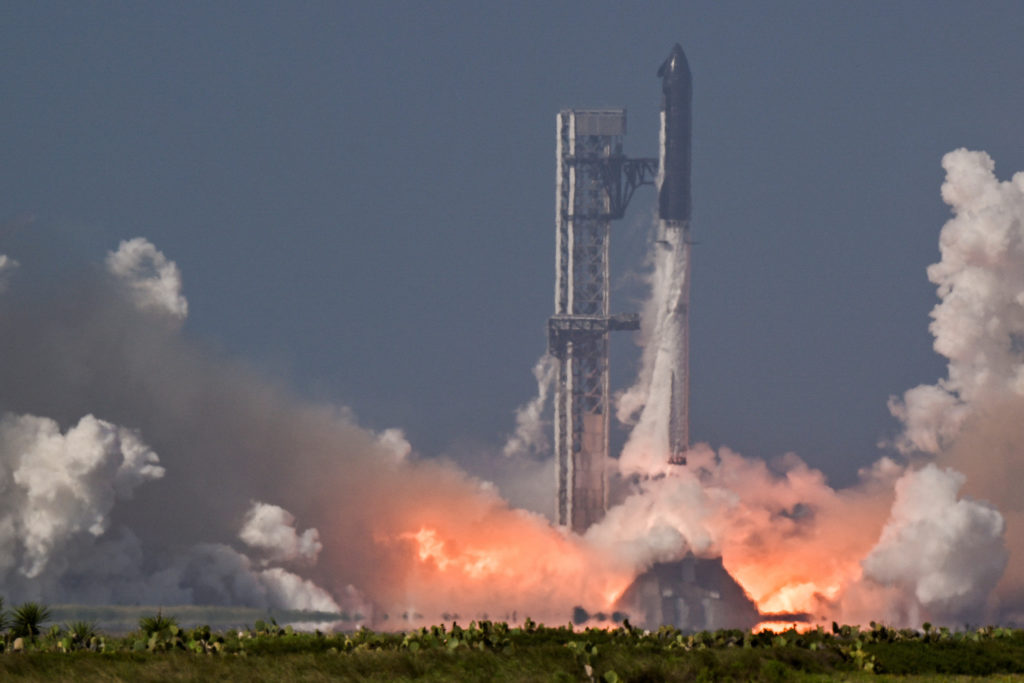
SpaceX launched its biggest and most powerful Starship yet on Friday, May 22, 2026, sending the third-generation vehicle on a suborbital test flight that NASA is counting on to land astronauts on the Moon. The redesigned mega rocket lifted off from a brand-new launch pad at Starbase, the company's facility near the southern tip of Texas, after a first attempt the evening before was scrubbed by last-minute pad issues.
A bigger, more powerful Starship
Standing 407 feet (124 meters) tall, the upgraded model dubbed Version 3 eclipses earlier Starship lines and packs more engine thrust through its 33 main engines. SpaceX engineers fitted the booster with fewer but larger and stronger grid fins for steering it back to Earth, and a more robust fuel transfer line to feed the engines. The stainless-steel spacecraft also carries more cameras, more navigation and computing power, and docking cones intended for future rendezvous and Moon missions. The debut followed our earlier preview of the Starship Version 3 Flight 12 test.
What the flight tested
For this 12th integrated test flight, the vehicle carried 20 mock Starlink satellites for release roughly halfway around the world. Nothing was recovered on this run: the first-stage Super Heavy booster was directed to the Gulf of Mexico, while the Starship upper stage targeted a controlled splashdown in the Indian Ocean more than an hour after liftoff. SpaceX had hoped to avoid the kind of midair explosions that rained wreckage over the Atlantic during back-to-back launches last year.
Timing and the road to the Moon
The launch came two days after SpaceX CEO Elon Musk announced plans to take the company public, a move detailed in our coverage of SpaceX's record IPO filing. NASA is paying SpaceX billions of dollars, along with Jeff Bezos' Blue Origin, to provide the lunar landers for its Artemis program. A docking trial in Earth orbit is planned for next year, and a crewed Moon landing under Artemis IV could follow as soon as 2028 using whichever lander is ready and safer first.
Part of a busy launch cadence
The flight adds to a packed period for the launch sector, which recently included Rocket Lab's latest Synspective satellite mission. The push toward fully reusable, heavy-lift launch also parallels broader advances in autonomous flight systems, including funding for autonomous aircraft technology. SpaceX says it is already taking reservations for private flights around the Moon and to Mars aboard Starship.
Reporting based on coverage from PBS NewsHour (Associated Press).