Hyundai Motor Group has put its AI-powered Data Flywheel into full operation, unifying data pipelines across Hyundai, Kia, Motional and its 42dot subsidiary to chase Waymo and Tesla on autonomous driving performance. The system, formally launched on September 13, closes the loop between real-world driving data, hard-example mining, virtual validation, and continuous model retraining.
What's Inside The Flywheel
The stack centers on 42dot, Hyundai's Seoul-based autonomous driving and SDV unit. It combines a Hard Example Mining pipeline (flagging edge cases from the fleet), a Continuous Training Pipeline, and a virtual validation layer built on 3D Gaussian Splatting that can rebuild scenarios in simulation. Data flows into a shared "Data Union" spanning Hyundai Motor, Kia, Genesis and Motional, with a Follow-the-Sun model that hands work between Korean and U.S. teams around the clock.
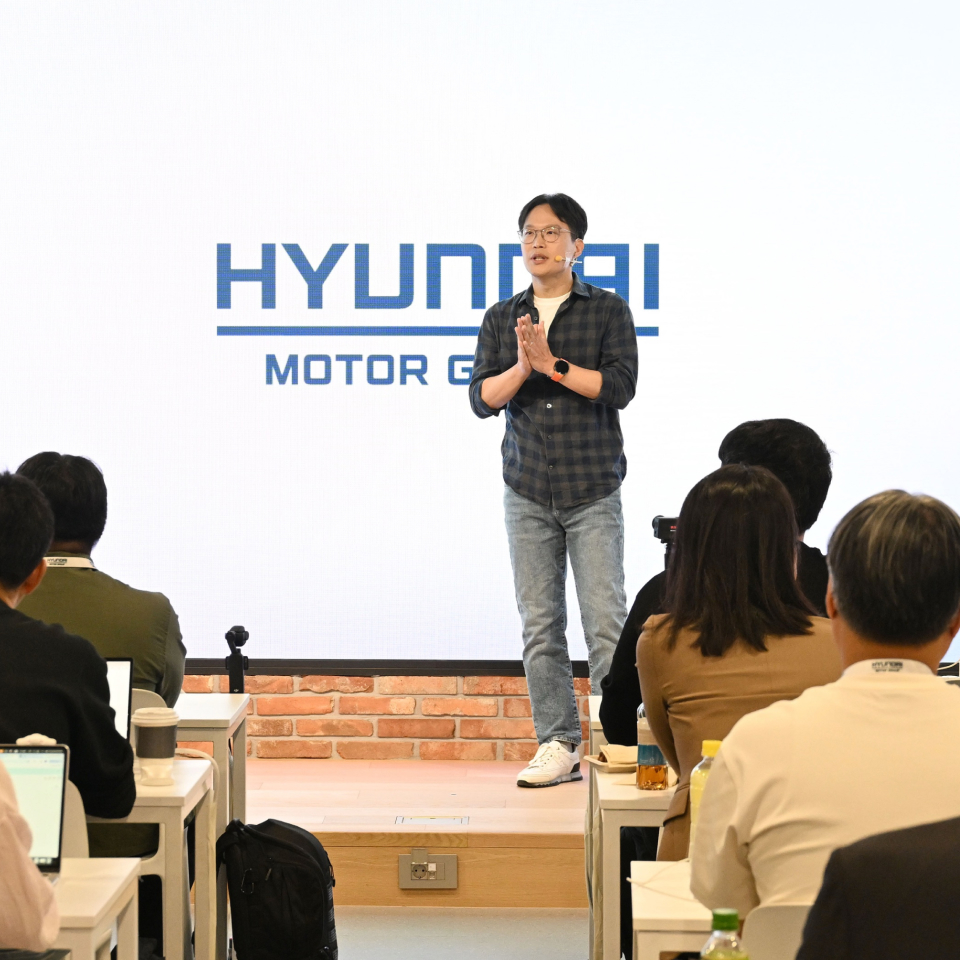
"Autonomous driving competitiveness comes down to having systems that enable continuous, rapid learning," said Minwoo Park, president and CEO of 42dot. Hyundai says the group has invested in dedicated compute infrastructure — reportedly a 100 MW hyperscaler-grade campus with tens of thousands of GPUs — instead of leaning on cloud rentals, in line with recent moves by NVIDIA's DSX AI Factory and hyperscaler-adjacent AI factories.
The Product Roadmap
Hyundai says the Data Flywheel is already feeding its NVIDIA-based Level 2+ autonomy for first-half 2028 launch, followed by Level 2++ in H2 2028 and its own in-house Atria AI Level 2++ platform in H2 2029. The tie-in with NVIDIA's Jetson Thor T3000/T2000 rollout tightens Hyundai's dependency on NVIDIA compute at the edge and in the training cluster.
Why It Matters
Tesla is defending a fleet-scale advantage with camera-only autonomy at Cybercab launch, while Waymo has been extending Level 4 city-by-city, most recently with a 2027 Tokyo target through Nihon Kotsu and GO. Hyundai's answer is less about being first to Level 4 and more about scaling reliable Level 2+/++ across millions of consumer vehicles — the volume game — while its Motional joint venture keeps ambitions alive in commercial robotaxi. The Data Flywheel is the connective tissue.
What To Watch
The near-term proof points are whether 42dot's Atria platform ships on schedule and whether Hyundai's Level 2+ launches actually match NVIDIA-based reference performance in customer vehicles. Longer term, watch for co-development with Marc Raibert's Physical-AI research spinning through Hyundai's Boston Dynamics stake, where the same flywheel logic could apply to humanoid robots.
Reporting based on coverage from Hyundai Motor Group, WardsAuto, and Automotive World.